How to Choose the Right Hot Rolled Plate for Your Project?
Choosing the right Hot Rolled Plate for your project can be daunting. With various options and specifications available, understanding the nuances is crucial. As industry expert James Walker states, “Selecting the correct Hot Rolled Plate isn't just about strength; it’s about the right application.” His expertise highlights the significance of considering both mechanical properties and project requirements.
Hot Rolled Plates are used in construction, manufacturing, and various applications. Different grades and thicknesses affect performance and cost. It’s essential to ask the right questions. What are the load requirements? How will the final product be used? These factors influence the right choice of Hot Rolled Plate.
Additionally, challenges often arise. Miscalculating thickness or strength can lead to project delays. Inexperience can result in poor choices that undermine quality. Learning from mistakes is part of the process. It reminds us to be diligent and informed in our selection. Choosing wisely can ultimately enhance durability and performance while minimizing waste.
Understanding the Basics of Hot Rolled Plates
Hot rolled plates are fundamental materials in construction and manufacturing. Understanding their properties helps in selecting the right type for any specific project. These plates undergo a heating process that enables better shaping and forming, resulting in a product with excellent mechanical properties. They are available in various thicknesses and widths, making them versatile for different applications.
When choosing a hot rolled plate, consider the intended use. For structural applications, strength and durability are key requirements. Hot rolled plates often exhibit good weldability, yet they may not always provide the surface finish needed for aesthetic projects. The scale on the surface can be difficult to work with if precise measurements or appearances are necessary. Assessing these attributes can save time and resources later.
Additionally, it's important to evaluate the specifications and standards applicable to your industry. Some projects may demand particular grades of steel, based on loading conditions or environmental factors. Reviewing past projects and consulting with professionals can enhance decision-making. Relying solely on general assumptions might lead to unexpected challenges down the line.
How to Choose the Right Hot Rolled Plate for Your Project?
| Characteristics |
Description |
Common Applications |
Thickness Range (mm) |
| Material Strength |
High tensile and yield strength |
Structural components |
5 - 100 |
| Surface Finish |
Rough exterior surface due to hot rolling |
Construction, manufacturing |
3 - 60 |
| Weight |
Heavy weight, suitable for robust applications |
Heavy machinery, bridges |
10 - 200 |
| Welding Capability |
Good weldability with proper preheating |
Fabrication work |
5 - 80 |
| Cost |
Typically lower than cold-rolled plates |
Economical projects |
4 - 50 |
Identifying Your Project Requirements
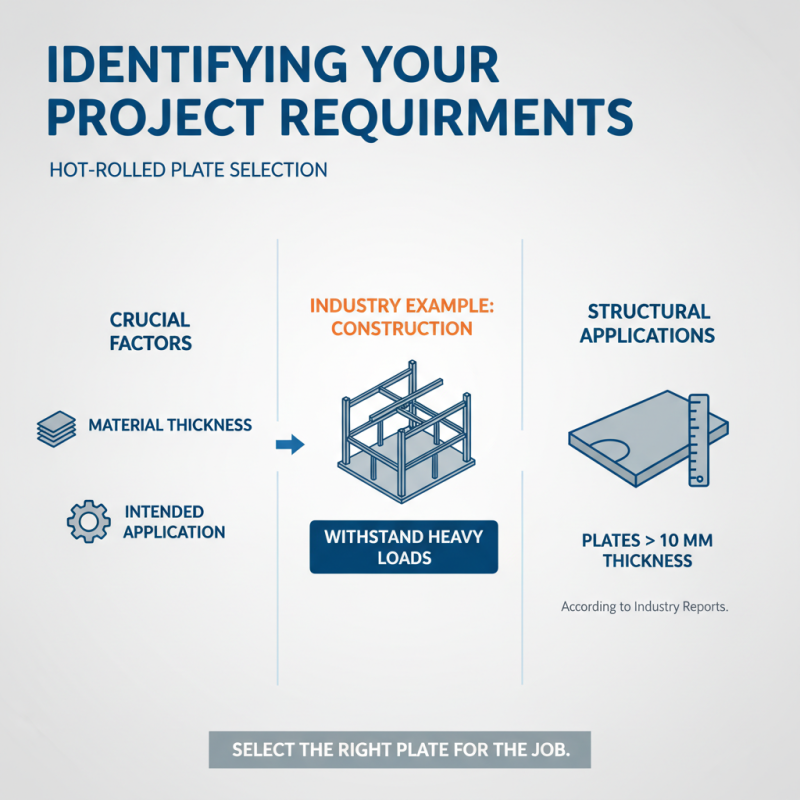
Identifying your project requirements is crucial when selecting the right hot rolled plate. The choice often hinges on specific needs, such as material thickness and intended application. For example, the construction industry typically demands plates that can withstand heavy loads. According to industry reports, plates with a thickness exceeding 10 mm are preferable for structural applications.
Project specifications also dictate the grade of material needed. High-strength carbon steel plates are widely used, with a yield strength of around 250 MPa. This durability can significantly impact the lifespan of a project. Furthermore, surface finish plays a vital role; a rougher surface can enhance bonding, while a smoother finish may be necessary for aesthetic applications.
It’s important to consider not just mechanical properties but also environmental factors. Projects in corrosive environments require plates with higher resistance to rust and chemical damage. A lack of attention here can lead to increased maintenance costs and unforeseen failures. Regularly reviewing the material specifications against performance data can help avoid these pitfalls. Understanding your project’s unique demands is key to making informed decisions.
Evaluating Material Properties and Specifications
When selecting a hot rolled plate, evaluating material properties is crucial. Hot rolled plates are commonly made from carbon steel and are known for their versatility. They typically have higher tensile strength compared to cold rolled plates. This is due to the high temperature process used, which enhances the ductility of the material.
Key properties to consider include yield strength, hardness, and thickness. The average yield strength for common hot rolled steels is around 250 MPa, but it can vary significantly based on the alloy composition. Hardness is also an important specification. The Rockwell hardness scale can indicate the toughness of the plate. A typical range you may find is HRB 70 to HRB 100.
Thicker plates can have unique challenges. They often require specific handling techniques during fabrication. Improper handling can lead to warping or bending. Additionally, consider how the chemical composition can affect weldability. High carbon content might lead to issues during welding. Testing the material in real-world conditions can be insightful. Industry reports suggest that many failures stem from unforeseen interactions within structural applications. Therefore, thorough evaluation helps avoid costly mistakes.
Comparing Different Grades and Thicknesses
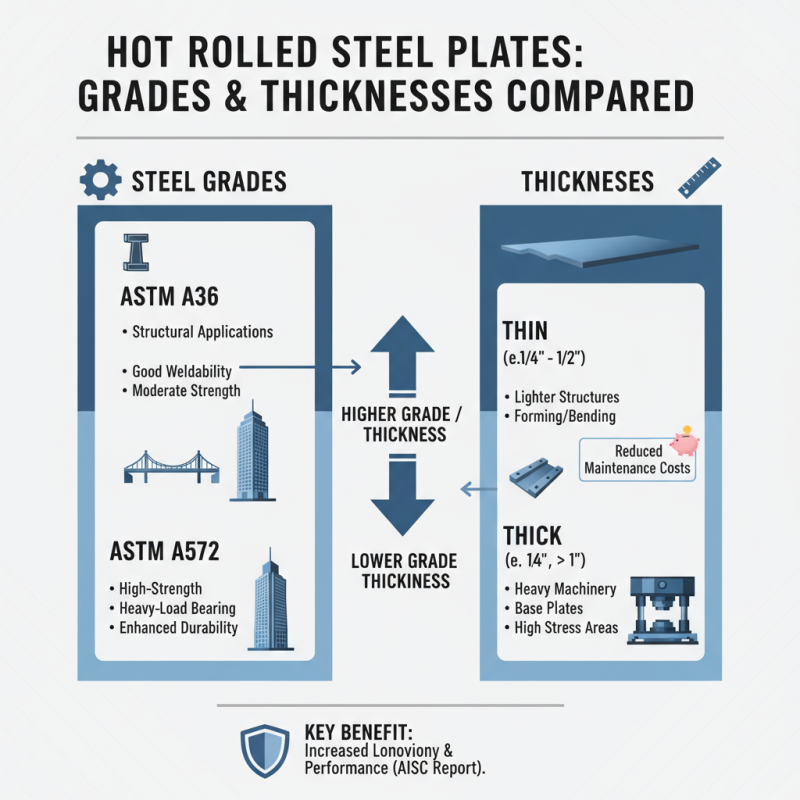
When selecting hot rolled plates for your project, understanding grades and thicknesses is crucial. Different grades offer varying mechanical properties and corrosion resistance. For instance, ASTM A36 is commonly used for structural applications due to its good weldability and strength. Meanwhile, ASTM A572 provides higher strength, making it suitable for heavy load-bearing structures. According to a report by the American Institute of Steel Construction, using higher-grade materials can enhance long-term durability, potentially reducing maintenance costs.
Thickness influences the plate's weight and performance. Plates typically range from 1/8 inch to several inches. For lighter applications, a thickness of 1/4 to 1/2 inch is often adequate. However, plates thicker than 1 inch are usually recommended for heavy machinery or structural support. A study from the Steel Construction Institute noted that increasing the thickness can lead to higher resistance under stress but may also require specialized handling and welding techniques.
Consider the application environment as well. Plates exposed to harsh conditions may need additional treatments. In some cases, the right thickness and grade can significantly impact safety and efficiency. Without careful evaluation, a mismatch could lead to structural failures or increased costs in the long run. Being informed about these factors will help guide your decision in choosing the right hot rolled plate for your needs.
Assessing Cost and Availability Factors
When selecting the right hot rolled plate for a project, assessing cost and availability is crucial. Prices fluctuate based on market demand and material shortages. It’s wise to monitor trends in raw material sourcing. A sudden spike in demand can drive costs higher. Keeping an eye on local suppliers can reveal hidden gems offering competitive rates.
Availability also varies by region. Some areas may have limited stock, leading to delays. Consider lead times when planning your project. A chilling realization is that a great deal may be available, but if it takes weeks to arrive, it could hamper your construction timeline. Verify that your chosen supplier has a reliable track record. You want to avoid the risk of unexpected backorders.
Understanding your project’s requirements is essential. Identify the grade and thickness needed for optimal performance. This ensures you select a plate that meets technical needs without overspending. However, be prepared to reconsider your options. Sometimes, alternative materials can provide cost savings and quicker availability. Aim for a balanced approach tailored to your project's unique demands.
Cost and Availability of Hot Rolled Plates by Thickness