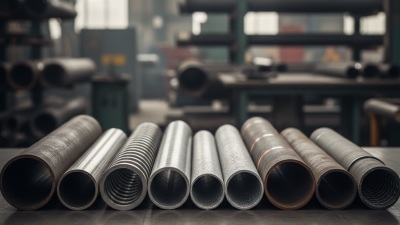
2026 Best Metal Coils for Global Buyers?
Choosing the 2026 best Metal Coils requires more than comparing prices per tonne. Global buyers must examine grade, coating, gauge tolerance, surface finish, mill certification, delivery reliability, and carbon data. A bright galvanized coil may look attractive under warehouse lighting, yet poor edge protection can appear after a long ocean voyage. Small details become expensive problems.
The World Steel Association reported approximately 1.89 billion tonnes of crude steel production in 2023. Its Short Range Outlook also shows that demand remains sensitive to construction, manufacturing, infrastructure spending, and regional economic weakness. Meanwhile, the International Energy Agency estimates that steelmaking produces about 8% of global energy-related carbon dioxide emissions. These figures make supplier transparency increasingly important. Buyers should request test certificates, inspection records, recycled-content evidence, and verifiable emissions information before signing contracts.
Edwin Basson, Director General of the World Steel Association, has stated, “Steel is essential to modern life.” That point remains practical, not merely rhetorical. The best Metal Coils for 2026 will balance performance, traceability, and responsible production. No ranking is perfect. A coil that suits automotive stamping may fail on a roofing line. A lower offer may also hide higher inspection, storage, or rejection costs. This guide therefore compares materials through an experienced buyer’s lens, using technical evidence and recognized industry reports. Some conclusions may change as energy prices, trade routes, and low-emission technologies develop. That uncertainty deserves attention. It should not be disguised.
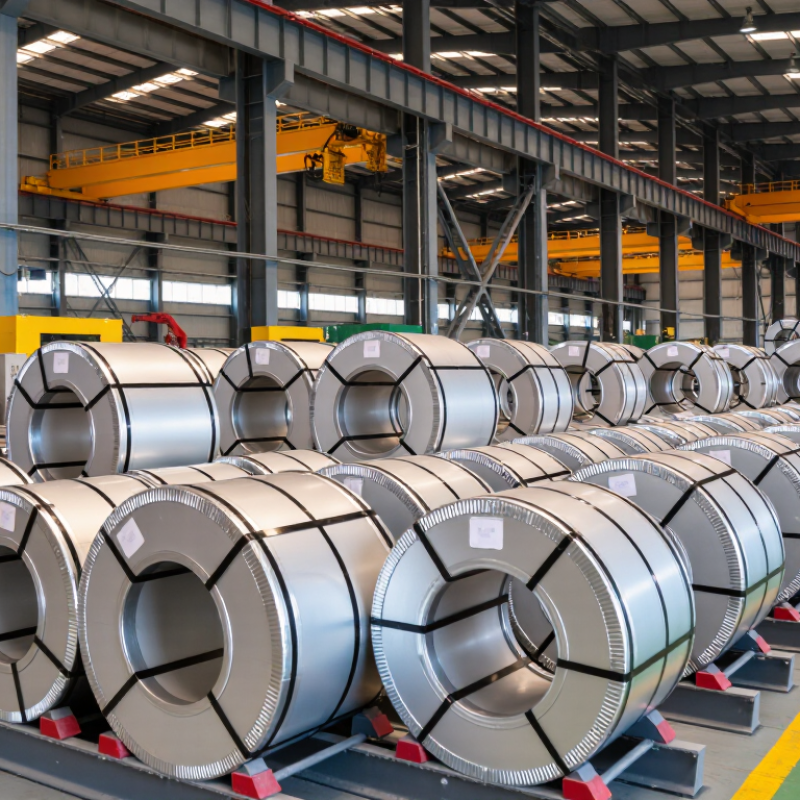
How ASTM A1008, EN 10130, and ASTM A653 Classify Steel Coil Grades
2026 Best Metal Coils for Global Buyers?
The word “best” depends on the finished product, forming method, and destination market. ASTM A1008 mainly classifies cold-rolled carbon steel sheets and coils. Common categories include Commercial Steel, Drawing Steel, and Structural Steel. These grades support different levels of formability and strength. For deep-drawn parts, a buyer may need Drawing Steel rather than standard Commercial Steel. Small differences matter. A tight bend can expose the wrong choice quickly.
EN 10130 covers cold-rolled low-carbon steel for cold forming. Grades such as DC01, DC03, DC04, and DC06 generally offer increasing formability. DC01 suits simpler forming, while DC04 or DC06 may perform better for complex stamped shapes. ASTM A653 classifies hot-dip galvanized steel by base steel grade, coating designation, and surface requirements. Coating weights such as G30 or G60 affect corrosion protection, but they do not replace a full mechanical specification. Confusion happens here.
Tips: Confirm thickness, width, yield strength, coating mass, surface finish, and coil weight before ordering. Ask for mill test certificates and verify the applicable edition of each standard. Compare equivalent grades carefully; they are not always technically identical. A spreadsheet helps. Real production trials help more. Also check edge condition and flatness, because these details can affect feeding, welding, and stamping. Some specifications look complete but still leave important tolerances unclear.
2026 Best Metal Coils for Global Buyers: How ASTM A1008, EN 10130, and ASTM A653 Classify Steel Coil Grades
Representative minimum yield-strength levels for commonly specified cold-rolled and galvanized steel coil grades. Values are shown in MPa; EN 10130 grades are presented using the lower limit of their specified yield-strength ranges.
ASTM A1008 and ASTM A653 use U.S. grade designations such as CS Type B, HSLAS Grade 50, and SS Grade 50, while EN 10130 uses forming-quality designations such as DC01, DC03, DC04, and DC05. Actual coil selection should also consider thickness, coating, formability, tensile strength, surface quality, and the applicable edition of each standard.
How 304 Stainless Coil’s 18% Chromium and 8% Nickel Support Corrosion Resistance
For global buyers comparing metal coils in 2026, 304 stainless remains a practical choice for many processing environments. Its nominal chemistry contains about 18% chromium and 8% nickel. Chromium reacts with oxygen and forms a thin passive film on the surface. This film helps shield the steel from moisture and routine atmospheric exposure. Nickel stabilizes the austenitic structure and supports ductility during forming. That matters when coils are rolled, stamped, or bent into tight shapes.
The protection is strong, but it is not unlimited. Chloride can attack the passive film, especially near seawater, salt storage, or poorly cleaned equipment. Surface scratches, embedded carbon steel, and heat tint may also reduce corrosion performance. A clean, smooth finish helps. So does proper pickling and passivation after fabrication. Buyers should check the material certificate, chromium and nickel values, thickness tolerance, surface finish, and coil edge condition. Small details matter. In practical inspections, rust stains sometimes come from contamination rather than the stainless grade itself. That distinction is easy to miss. It deserves review.
For demanding coastal or chemical applications, 304 may need comparison with a higher-alloy stainless grade. The correct choice depends on chloride concentration, temperature, cleaning chemicals, and exposure time. No coil is universally corrosion-proof. That assumption can become an expensive mistake. Testing a sample in the intended environment is often wiser than relying only on a standard datasheet.
Which Coil Specs Matter Most: Thickness, Width, Inner Diameter, and Tolerances
For global buyers, the best metal coil is not simply the cheapest coil. It is the coil that fits the forming line, slitting plan, and final application. The World Steel Association reported 1,892.2 million tonnes of crude steel production in 2023. That scale increases supplier choice, but also increases specification risk. Thickness affects weight, forming force, and coating performance. A small variation can cause feeding problems in high-speed lines.
Width must match the slitter, press, or customer blank size. Extra width may create scrap. Insufficient width can destroy yield. Inner diameter matters because an unsuitable coil eye may not fit the payoff reel. Common handling systems use different mandrel sizes, so confirm the required ID before ordering. Tolerances deserve equal attention. ASTM A568/A568M, ASTM A480/A480M, and EN 10051 address dimensional requirements for different flat steel products. They are not interchangeable. Buyers should request the exact standard, measurement method, and sampling frequency.
Tips: Ask for thickness tolerances across the strip, not only one point. Check camber, flatness, edge condition, coil weight, and outside diameter. Request a mill test certificate and recent inspection records. A practical trial coil can reveal more than a polished datasheet. I have seen projects focus heavily on grade while ignoring coil geometry. That mistake is easy to repeat. Also, “standard tolerance” is too vague for automated production. Define it numerically, and confirm whether values apply before or after leveling.
2026 Best Metal Coils for Global Buyers? — Which Coil Specs Matter Most: Thickness, Width, Inner Diameter, and Tolerances
Buying note: These are general, indicative ranges for specification planning—not guaranteed supply limits or universal standard tolerances. Confirm the applicable product standard, grade, ordered dimensions, measurement method, edge condition, coil weight, and tolerance agreement with the supplier before purchase.
How Mill Test Certificates and Incoterms 2020 Help Verify Global Coil Purchases
2026 Best Metal Coils for Global Buyers?
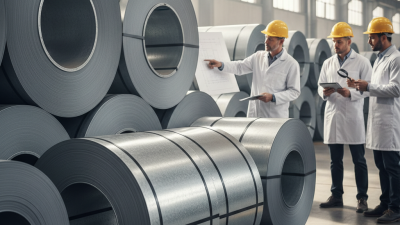
A mill test certificate is more than a quality form. It links the coil to a specific heat number, grade, thickness, width, and production batch. Reliable certificates also show chemical composition, tensile strength, yield strength, elongation, and test standards. Compare every value with the purchase order and technical specification. Check the coil label, certificate number, and shipping documents together. Small mismatches can become expensive problems.
Incoterms 2020 define who arranges transport, insurance, export clearance, and delivery risk. They do not prove coil quality or transfer ownership by themselves. Under FOB, risk usually moves at the named port after loading. Under CIF, the seller arranges freight and minimum insurance, but the buyer still needs to understand the destination risk. With DAP, import clearance and duties normally remain the buyer’s responsibility. The named place matters greatly.
Use the MTC before shipment, not only after arrival. Ask for clear scans and confirm the issuing mill’s authorized contact. An independent inspection can verify dimensions, surface condition, markings, and weight before loading. I have seen neat certificates hide unclear test references. That is a warning. Digital records help, but they are not automatically accurate. A careful buyer should question missing data, inconsistent heat numbers, and vague Incoterm wording. In practice, the strongest purchase file connects the contract, MTC, inspection report, packing list, bill of lading, and agreed Incoterm. Mistakes still happen. That is why verification should be planned, documented, and repeated.