Choosing the China best Carbon Steel Coil supplier requires more than comparing quotations. Global buyers need stable quality, verified production capacity, and communication that remains clear after payment. A low price may look attractive, but inconsistent thickness can create serious problems during stamping, welding, or fabrication. The right supplier should provide practical evidence, not only polished promises.
Experienced buyers usually review mill test certificates, chemical composition, tensile strength, coil weight, surface condition, and dimensional tolerance. They also confirm whether the material meets ASTM, EN, JIS, or other agreed standards. Factory audits, production photographs, and third-party inspections can reveal details that brochures often miss. A reliable supplier should explain its equipment, inspection process, packaging method, and export experience in specific terms.
Logistics matter as well. A damaged edge, wet package, or unclear shipping document can delay an entire project. Strong suppliers use suitable steel strapping, moisture protection, clear markings, and traceable batch records. They should also discuss realistic lead times and possible claims procedures before the order is placed.
There is no perfect supplier.
Even experienced manufacturers can make mistakes. Buyers should ask difficult questions and verify answers independently. Some suppliers may offer excellent service but limited flexibility. Others may have strong production capacity but slower communication. This guide examines the qualities that make a China Carbon Steel Coil supplier dependable for global buyers, while recognizing that each project has different technical, commercial, and delivery requirements. Careful comparison remains essential.
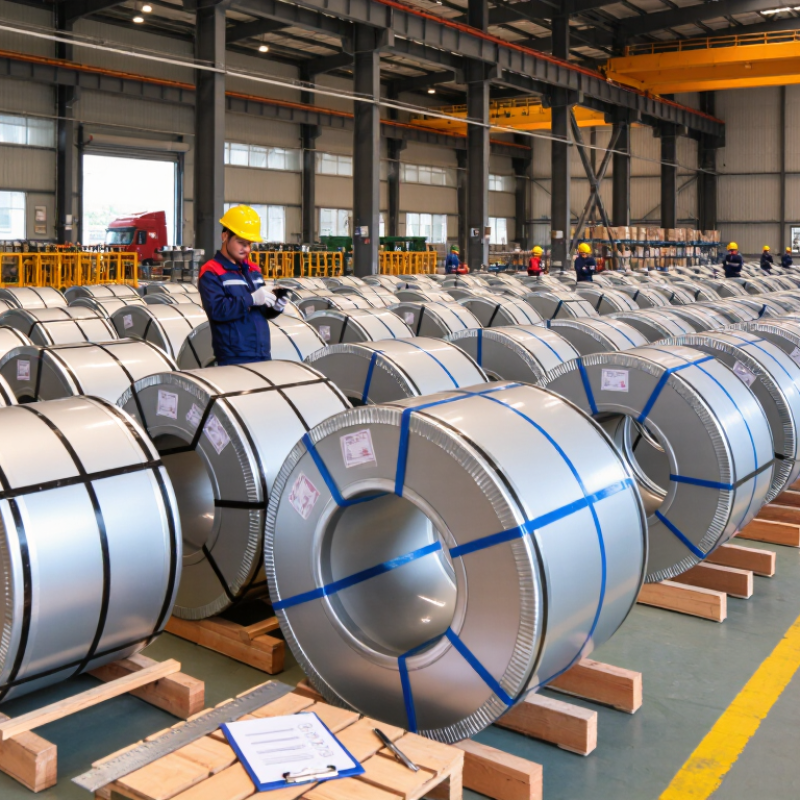
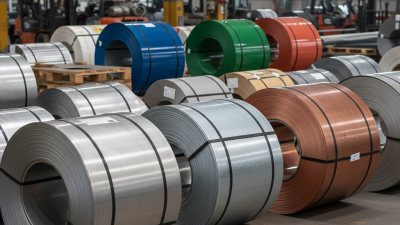
Carbon steel coil is flat-rolled steel wound into large, compact rolls. Its carbon content affects strength, hardness, weldability, and forming performance. Buyers select coils by grade, thickness, width, surface condition, and intended use. Common applications include construction beams, automotive parts, machinery, storage tanks, and household appliances.
Global demand matters because carbon steel supports projects in many industries. Infrastructure investment increases coil consumption, while manufacturing cycles can reduce it quickly. Prices also respond to energy costs, freight capacity, raw material supply, and regional construction activity. A low offer may look attractive. However, inconsistent thickness or poor edge quality can create costly production delays. This is easy to underestimate.
Tips: Ask for a mill test certificate, dimensional tolerance data, coil weight, inner diameter, and packing details. Check whether the surface is pickled, oiled, or untreated. Inspect sample coils before placing a large order. Clear specifications prevent avoidable disputes. Still, specifications are not everything. Communication during loading and inspection also matters.

China Best Carbon Steel Coil Supplier for Global Buyers?
How to Evaluate Chinese Carbon Steel Coil Suppliers
China produced about 1.89 billion tonnes of crude steel in 2023, according to World Steel Association’s World Steel in Figures 2024. Large output does not automatically mean consistent coil quality. I would evaluate suppliers through documented production controls, not attractive quotations alone. Request the exact steel grade, thickness tolerance, width range, coil weight, surface condition, and applicable standard. Reliable suppliers should provide mill test certificates linked to each heat number. Independent inspection can verify chemical composition, yield strength, tensile strength, elongation, and dimensional accuracy before shipment.
Production capacity also needs careful checking. A supplier may claim high monthly output but outsource part of the process. That can complicate traceability. Compare certificates with test results from recent lots. ISO 9001 certification supports process management, but it does not replace product inspection. The OECD’s steel market reports repeatedly highlight overcapacity and volatile trade conditions, so buyers should examine inventory age, export experience, packing quality, and delivery records. I would also test communication speed. Small delays often become expensive misunderstandings.
Tips: Ask for three recent inspection reports and one blank certificate. Check whether heat numbers match the coil labels. Confirm packaging for sea transport, including edge protection and moisture control. Do not accept vague terms such as “commercial quality.” A low price may reflect thinner material, wider tolerances, or weaker after-sales support. That possibility deserves uncomfortable questions.
Minimum specified yield strength of representative structural steel grades commonly requested by global buyers. Values vary by thickness and applicable standard; always verify the mill test certificate and product specification.
Buyer takeaway: A reliable supplier should clearly match the requested grade, thickness, coating or surface condition, chemical composition, mechanical properties, and certification requirements. Compare suppliers using standards-based documentation, traceability, inspection procedures, production capacity, lead time, and export experience rather than price alone.
For global buyers, the right carbon steel coil depends on use, forming method, and applicable standards. A reliable supplier should explain these differences clearly, not simply offer the lowest price.
Hot-rolled coils commonly include ASTM A36, A572 Grade 50, EN S235JR, S355JR, Q235B, and Q355B. They suit structural parts, frames, tanks, and general fabrication. Cold-rolled coils offer tighter thickness control and smoother surfaces. Typical grades include ASTM A1008 and EN DC01. They work well for panels, cabinets, and precision components.
Specifications need careful review. Buyers usually define thickness, width, inside diameter, coil weight, surface condition, and edge type. Thickness may range from 0.5 to 20 millimeters, depending on the production route. Width often falls between 600 and 2,000 millimeters. Mechanical properties, chemical composition, flatness, and dimensional tolerances should match the selected standard. Mill test certificates and independent inspection records add practical confidence.
Details matter.
A mistake remains costly. A structural grade may crack during deep drawing, while a smooth cold-rolled surface may not suit heavy forming. In my experience, buyers sometimes confirm the grade but overlook delivery condition, welding requirements, or rust protection. That gap deserves a second check. Clear packing photos, traceable heat numbers, and realistic production schedules also help separate dependable supply from attractive paperwork.
Global buyers often judge a carbon steel coil supplier by its quality control system, not by price alone. Reliable production begins with verified raw materials and documented heat numbers. Each coil should remain traceable from steelmaking to shipment.
Quality teams normally check chemical composition, tensile strength, yield strength, elongation, thickness, width, and surface condition. Testing follows the agreed specification, such as ASTM, EN, JIS, or other recognized standards. Calibrated instruments support accurate results. Independent inspectors may witness sampling, testing, and loading when required.
The mill test certificate should match the coil identification and inspection records. Packaging also matters. Strong edge protection, moisture-resistant wrapping, and clear labels reduce damage during ocean transport. Some suppliers use ultrasonic testing for internal defects, especially on demanding orders. Small details matter.
No inspection system is flawless. A missed edge crack can create serious problems after slitting or forming. For this reason, experienced buyers should review sample reports, audit production practices, and confirm corrective-action procedures. I have found that transparent communication often reveals more than polished certificates. When a deviation occurs, a dependable supplier explains the cause, documents the response, and prevents repetition. That level of discipline builds confidence across borders.
China Best Carbon Steel Coil Supplier for Global Buyers?
Price is only the starting point. The World Steel Association reported global crude steel output of about 1.89 billion tonnes in 2023. That scale does not guarantee stable coil prices. Buyers should compare the mill price, thickness tolerance, coating, packaging, and payment terms. Ask whether the quotation follows a recognized regional benchmark or a private formula. Freight can quietly change the final cost.
Shipping needs practical checking. UNCTAD’s Review of Maritime Transport 2024 reported continued disruption and volatility across major shipping routes. A low coil price may become expensive after ocean freight, insurance, port handling, and demurrage. Request a complete landed-cost sheet. Confirm the loading port, estimated transit time, container or breakbulk method, and moisture protection. I have seen buyers focus on a $10 price difference, then lose more through storage delays.
Import compliance is less visible, but more serious. The correct HS classification depends on grade, dimensions, coating, and processing. Buyers should verify duties, quotas, sanctions screening, origin rules, and anti-dumping measures with customs professionals. Require a commercial invoice, packing list, bill of lading, mill test certificate, and certificate of origin. For European imports, iron and steel products may require carbon-emissions reporting under the Carbon Border Adjustment Mechanism. Requirements can change. That is where careful assumptions often fail.
| Buyer Dimension | What Buyers Should Check | Indicative Data or Common Requirement | Commercial Impact |
|---|---|---|---|
| Product category | Confirm whether the coil is hot-rolled, cold-rolled, galvanized, or coated steel. | Hot-rolled coil is commonly supplied in approximately 1.2–25 mm thickness; cold-rolled products are generally thinner and require tighter surface and dimensional control. | Processing level, surface quality, and intended application can materially change the quotation. |
| Steel grade | Match the chemical composition and mechanical properties with the buyer’s standard. | Common standards include ASTM, EN, JIS, and GB. Typical structural grades may specify yield strength, tensile strength, elongation, and impact performance. | A non-equivalent grade may fail fabrication, welding, or end-use requirements even when the dimensions are correct. |
| Indicative price basis | Request a written quotation that states grade, size, quantity, trade term, validity, and included services. | Steel coil prices are market-sensitive and may change daily. A comparable offer should use the same thickness, width, grade, quantity, currency, and Incoterm. | The lowest ex-works price is not necessarily the lowest landed cost after inland transport, ocean freight, duties, inspection, and port charges. |
| Price components | Separate the base steel price from conversion, slitting, packing, testing, inland haulage, freight, insurance, and taxes. | A landed-cost model should include product value, export handling, ocean freight, marine insurance where applicable, customs duty, import VAT or sales tax, and destination fees. | Clear cost separation makes supplier comparisons and budget approval more reliable. |
| Minimum order quantity | Check whether the order is mill-produced, trader-stocked, or cut from existing inventory. | Mill production often favors full-coil or container-scale quantities, while stock orders may allow smaller lots but can carry higher unit costs. | Higher volume may reduce unit costs but increases inventory, financing, and storage exposure. |
| Coil dimensions | Confirm thickness tolerance, width tolerance, coil inner diameter, outside diameter, coil weight, and maximum handling weight. | Typical coil inner diameters are commonly specified around 508 mm or 610 mm, but the required value depends on the processing line. | Incorrect coil dimensions can prevent safe unloading or compatibility with a slitting, leveling, or stamping line. |
| Packing and corrosion protection | Specify seaworthy export packing, edge protection, moisture barriers, banding, and coil orientation. | Export packing may include waterproof paper, metal or plastic wrapping, steel bands, protective edges, and skids or saddles where required. | Packing affects rust risk, cargo stability, handling safety, and claims evidence. |
| Container and loading limits | Verify carrier and port restrictions before booking, especially for dense steel cargo. | A 20-foot container often accommodates more dense steel cargo than a 40-foot container, but the actual payload depends on the container rating, road limits, terminal rules, and carrier acceptance. | Overweight cargo can cause rebooking, additional handling charges, refused loading, or inland delivery restrictions. |
| Ocean shipping time | Obtain a route-specific sailing schedule and distinguish port-to-port time from door-to-door time. | Main ocean transit from China to major Asian destinations may take roughly 5–15 days; routes to Europe or North America commonly take several weeks, excluding port and customs delays. | Schedules vary with routing, transshipment, congestion, weather, blank sailings, and security-related diversions. |
| Incoterms® 2020 | Ensure the quotation names the exact rule and named place or port. | FOB generally transfers cost and risk at the agreed shipment port; CIF includes cost, insurance, and freight to the named destination port; DAP usually places import clearance and import taxes with the buyer. | The trade term determines who arranges transport, insurance, export formalities, import clearance, and delivery. |
| HS classification | Confirm the destination country’s tariff schedule rather than relying only on a supplier’s code. | Carbon steel flat products may fall under HS headings such as 7208, 7209, or 7210 depending on rolling method, thickness, coating, width, and other characteristics. | Classification affects customs duty, trade remedies, statistical reporting, licensing, and origin documentation. |
| Import duties and trade remedies | Check ordinary duty, anti-dumping or countervailing measures, safeguard tariffs, quotas, and special steel declarations. | Rates and applicability depend on the importing country, product specification, exporting country, producer status, and effective date of the measure. | Trade-remedy exposure can exceed the standard customs duty and should be checked before signing the purchase contract. |
| Required documents | Agree on the document package before shipment. | Common documents include commercial invoice, packing list, bill of lading, certificate of origin where required, mill test certificate, insurance certificate when applicable, and customs entry data. | Missing or inconsistent documents may delay customs release, payment, or cargo collection. |
| Quality inspection | Define inspection timing, sampling method, acceptable tolerances, and claim procedure. | Inspection can cover chemical composition, mechanical properties, dimensions, surface condition, coil weight, packing, and markings. Third-party inspection is commonly arranged before shipment when required. | A written inspection standard reduces disputes over quality, quantity, and visible transport damage. |
| Payment and risk control | Use a documented payment schedule linked to production, inspection, shipping documents, or acceptance conditions. | Common structures include a deposit with balance against shipping documents, documentary credit, or other secured arrangements agreed by both parties. | Payment terms influence working capital, financing cost, supplier risk, and the buyer’s ability to resolve non-conformity. |