How to Choose the Best Copper Pipes for Your Project?
Choosing the right copper pipes for your project can be a challenging task. Expert plumber John Smith emphasizes, "The quality of your copper pipes makes all the difference in your systems." With a multitude of options available, it’s essential to understand the characteristics of copper pipes to make an informed choice.
Copper pipes are known for their durability and resistance to corrosion. However, not all copper pipes are created equal. There are different grades and types, which can impact their performance in various applications. Factors such as wall thickness, joint connections, and the intended use play critical roles in selection.
Consideration of these details ensures functionality and longevity in your plumbing systems. Selecting the wrong type can lead to leaks or premature failure. Moreover, while aesthetics may not seem important, visual appeal can add value to your project. Making the right choice requires careful evaluation, yet mistakes can happen. Being aware of common pitfalls is just as crucial as understanding the advantages of copper pipes.
Factors to Consider When Choosing Copper Pipes
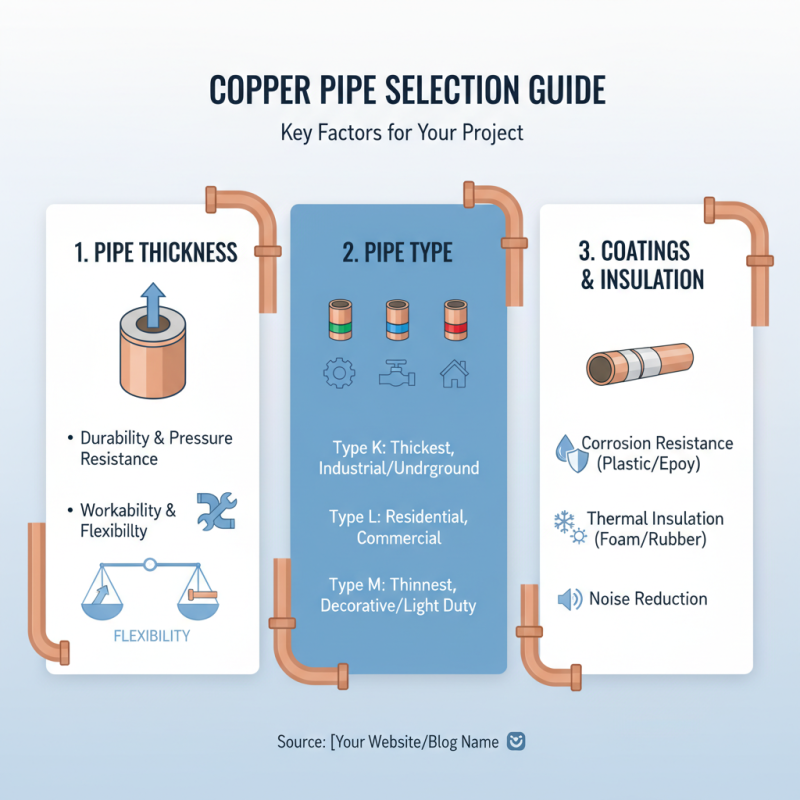
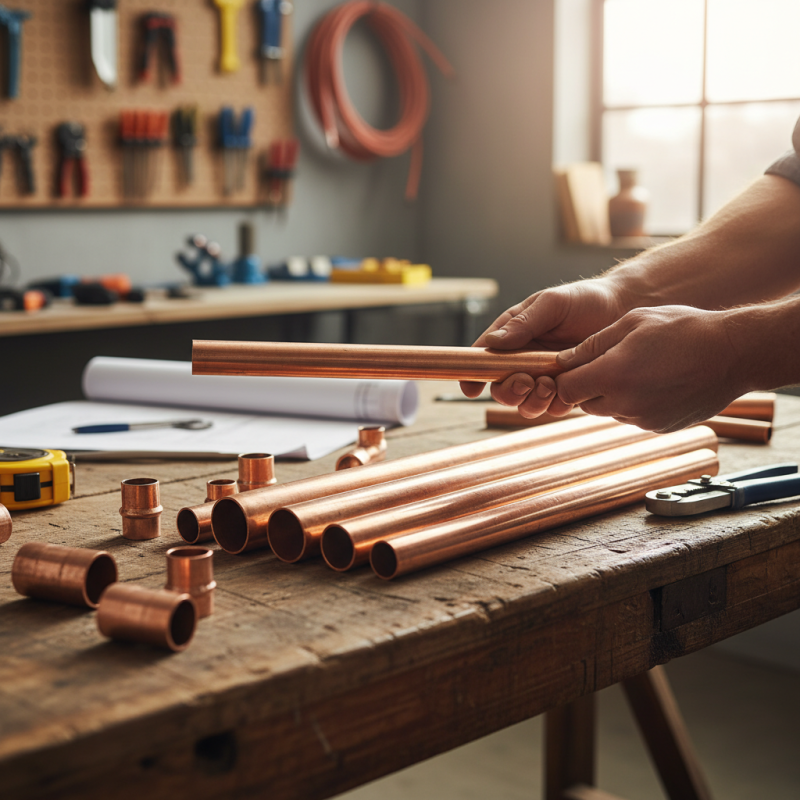
Choosing the right copper pipes for your project requires careful consideration of several factors. First, you must evaluate the pipe's thickness. Thicker pipes offer better durability and resistance to pressure. However, they can be harder to work with. A balance between strength and flexibility is key.
Next, consider the pipe's diameter. Smaller diameters are suitable for residential applications, while larger ones work best for industrial uses. Think about the intended project. The right diameter can significantly improve efficiency. Also, note the type of copper used. Type K pipes are thicker and suitable for underground projects, while Type L and M are more common for above-ground use. This nuance can heavily influence your choice.
Additionally, inspect local building codes. These regulations often dictate what types of materials are acceptable. Ignoring them can lead to costly mistakes. Project requirements may also include weather conditions and installation environments. These factors test the pipes' lifespan. Reflecting on these considerations can prevent future issues and ensure long-lasting results.
Types of Copper Pipes and Their Applications
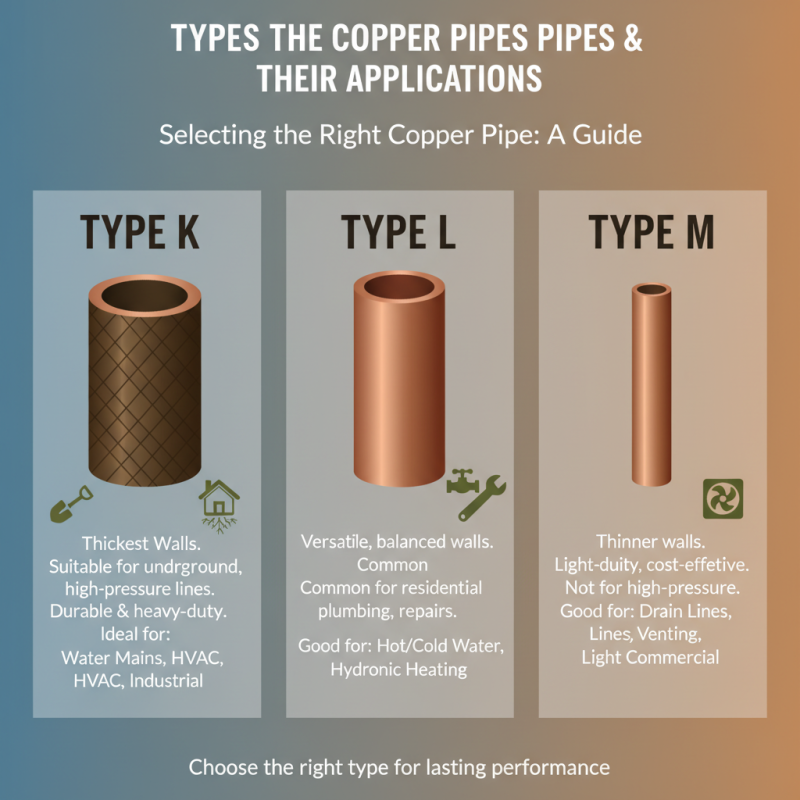
When selecting copper pipes, understanding their types and applications is crucial. Copper pipes primarily come in three types: Type K, Type L, and Type M. Type K pipes have the thickest walls, making them suitable for underground installations where pressure is higher. They are durable but can be heavier to handle. Type L pipes are versatile and widely used for residential plumbing. They strike a balance between thickness and weight, suitable for most applications. Type M pipes, with thinner walls, are generally used in light-duty applications. They are less expensive but may not be ideal for high-pressure situations.
Consider the context of your project when choosing. The pipe's durability and application matters. For instance, not all projects require the heavy-duty nature of Type K. In specific renovations, Type L might be more than adequate. Think about the location and the expected pressure within the system. Choosing the wrong type could lead to costly repairs later.
Tips: Always check local building codes before installation. This ensures compliance and safety. If in doubt, consult a plumbing expert to determine which type suits your project's requirements. Remember, investing the time to choose the right pipe pays off in the long run.
Benefits of Using Copper Pipes in Plumbing Projects
Copper pipes are a popular choice for plumbing projects. They offer several advantages that make them stand out. First, copper is highly durable. It can withstand high temperatures and extreme pressure. This means fewer leaks and longer-lasting installations.
Another significant benefit is copper's resistance to corrosion. Unlike other materials, it doesn't rust or corrode easily. This quality ensures the safety of your water supply. Copper pipes also have antimicrobial properties. This helps in maintaining a cleaner water system.
When selecting copper pipes, consider the thickness. Thicker pipes tend to be more durable. Look for the right gauge for your project's needs.
Tips for installation include ensuring proper support for the pipes. Overhead pipes require brackets to prevent sagging. Always check for sharp edges before installation. This can prevent injuries during handling. Remember to use the right fittings as well. A good fit can save you headaches later on.
Benefits of Using Copper Pipes in Plumbing Projects
How to Measure and Calculate Copper Pipe Requirements
When planning a plumbing project, accurate measurement of copper pipe requirements is crucial. Start by determining the overall length needed for your installation. An industry report states that improper measurements can lead to up to 30% material wastage. For a small home plumbing job, use a tape measure for each run. Always double-check your measurements to avoid costly errors.
Next, the diameter of the pipes is important. Standard sizes include ½ inch, ¾ inch, and 1 inch. Each size affects water flow and pressure. According to the Plumbing Engineering Design Handbook, too small a diameter may restrict flow, while overly large pipes can lead to increased costs. Consider your specific project requirements. Assess the expected water volume and system pressure.
Lastly, it’s wise to account for fittings and joints. They often add complexity to your calculations. Estimating these materials can be challenging. A survey revealed that nearly 40% of DIYers overlook these additions. Remember, over or under-estimating can impact project success. Careful planning is your best ally in ensuring a smooth installation.
Common Mistakes to Avoid When Selecting Copper Pipes
When selecting copper pipes, avoid common pitfalls that can lead to costly mistakes. One prevalent error is choosing the wrong type of copper pipe for the intended application. There are three main types: Type K, Type L, and Type M. Type K has the thickest walls, making it durable for underground applications. Type L is suitable for most residential applications, while Type M is often used for interior plumbing. Not understanding these differences can compromise the integrity of plumbing systems.
Another mistake is neglecting to consider the environmental factors. For example, copper pipes exposed to moisture can corrode faster, especially if not properly insulated. According to the Copper Development Association, improper installation can lead to leaks, which can cause significant water damage. Additionally, ignoring local codes or regulations may lead to complications. Always ensure compliance with the relevant plumbing codes to avoid future issues.
Finally, many underestimate the importance of quality over cost. Cheaper pipes may seem appealing, but they often lack the longevity and reliability of higher-quality options. The overall lifespan of copper pipes can be over 50 years when properly selected and installed. Investing in quality not only saves money in the long run but ensures system efficiency. Reflect on these factors to avoid missteps.
How to Choose the Best Copper Pipes for Your Project? - Common Mistakes to Avoid When Selecting Copper Pipes
| Pipe Type |
Diameter (inches) |
Wall Thickness (inches) |
Application |
Common Mistakes |
| Type K |
0.5 |
0.065 |
Residential Plumbing |
Ignoring local codes |
| Type L |
0.75 |
0.045 |
Heating Systems |
Choosing inadequate support |
| Type M |
1 |
0.032 |
General Purpose |
Not considering pressure ratings |
| Medical Gas |
0.625 |
0.049 |
Healthcare Facilities |
Overlooking cleanliness standards |
| Refrigerant Lines |
0.375 |
0.032 |
HVAC Systems |
Using incorrect insulation |