Leave Your Message
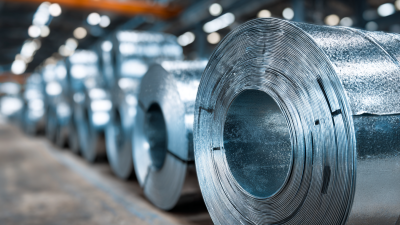
Choosing the right Galvanized Coil in 2026 is not simply a matter of comparing prices. A coil that performs well in a dry warehouse may struggle near salt spray, persistent moisture, or chemical exposure. The details matter: zinc coating mass, steel grade, thickness, width, surface finish, and intended forming process. A coating that is too light can shorten service life. One that is unnecessarily heavy may raise costs or complicate fabrication.
Galvanizing specialist Thomas Langill’s technical guidance supports a practical principle, paraphrased here: “Match the coating to the exposure and the job the steel must do.” Treat that as a starting point, not a substitute for checking the mill certificate, applicable specifications, and supplier documentation. Ask how the coil will be bent, painted, stored, and exposed after installation. A clean sample under workshop lights tells only part of the story.
Look closely. Compare coating requirements and tolerances, then confirm that the documentation matches the delivered batch. For outdoor use, consider moisture, coastal air, and cut edges—not only the broad sheet surface. For painted products, verify surface treatment and compatibility with the coating system. Some buyers focus heavily on zinc weight and overlook forming performance. That can be an expensive blind spot. Specifications also cannot predict every site condition, so record assumptions and review them with a qualified materials professional. This guide explains the checks that help buyers make a sound, evidence-based choice in 2026, while recognizing that the cheapest coil is not always the best value.

Choosing a galvanized coil starts with the part it needs to become. Start with the part. A roofing panel, appliance casing, and formed bracket face different demands. Note the required thickness, bend radius, surface finish, and whether the steel will be punched, welded, or painted. Tight bends can crack an unsuitable coating, while oily surfaces may complicate later finishing. Small details matter.
Then map the service environment. A dry indoor warehouse differs from a humid workshop, coastal site, or area exposed to road salt. Consider condensation, trapped water, abrasion, and contact with other metals. These details help define the needed zinc coating mass and any surface treatment, such as passivation or oiling. More coating is not automatically the right answer; forming needs and fabrication methods also matter. Ask suppliers for test data and tolerances, and compare them against the actual exposure and process. A stated coating mass alone cannot predict service life. Conditions vary. If the environment is uncertain, document assumptions and test a representative sample before committing to a large order. That extra check can feel slow, but overlooking a drain path or paint step can cost more later.
| Application | Typical Environment | Coating Starting Point | Key Performance Requirements | Checks Before Ordering |
|---|---|---|---|---|
| Indoor HVAC ductwork and general building components | Dry indoor conditions with limited exposure to condensation or corrosive chemicals | Consider a lighter coating where permitted by the applicable product specification and service conditions | Formability, surface quality, dimensional consistency, and compatibility with fabrication processes | Confirm sheet thickness, bend requirements, surface finish, and whether the part will be painted or left uncoated |
| Roofing, wall cladding, and exterior building panels | Outdoor exposure to rain, humidity, and changing temperatures; severity varies by location | Compare coating mass options such as G90 or Z275 where specified; these designations represent about 275 g/m² of zinc coating in total on both sides | Atmospheric corrosion resistance, coating adhesion during forming, and a suitable paint system if a prepainted finish is required | Assess local exposure, cut edges, drainage, building design, maintenance expectations, and the full coating system—not coating mass alone |
| Automotive or appliance parts that are formed and subsequently painted | Manufacturing and service conditions depend on the component, paint system, and end use | Select the coating type and mass specified by the part design or customer specification; zinc-iron or other coated products may be required for particular processes | Drawability, surface consistency, paint adhesion, weldability, and compliance with component-specific requirements | Confirm the governing material specification, steel grade, forming severity, joining method, and paint pretreatment process |
| Outdoor agricultural, utility, or general-purpose enclosures | Intermittent wetting and drying; possible exposure to dust, fertilizers, animal waste, or cleaning chemicals | Use the project specification and exposure assessment to set the coating requirement; consider additional protection for aggressive local conditions | Resistance to the actual chemical and moisture exposure, edge protection, fabrication durability, and maintainability | Identify chemicals, concentration, temperature, cleaning frequency, and whether the material can be painted or otherwise protected |
| Coastal structures or components exposed to salt spray | Marine air, salt deposits, frequent moisture, or direct splash exposure | Do not select by coating designation alone; evaluate a suitable coating system and consider duplex protection, such as compatible paint over galvanized steel | Corrosion protection matched to exposure, coating-system compatibility, and protection of cut edges and fasteners | Distinguish marine atmosphere from direct seawater or splash exposure; obtain project-specific corrosion guidance and maintenance requirements |
| Roll-formed sections, framing, and structural components | Indoor or outdoor service depending on the finished structure and its location | Choose coating mass in accordance with the structural design, product standard, and intended exposure | Specified yield strength and thickness, formability, coating integrity after roll forming, and traceability | Verify the steel grade, thickness tolerance, applicable standard, forming geometry, and any welding or bolting requirements |
Selection note: ASTM A653/A653M coating designations such as G90 and metric designations such as Z275 refer to coating mass per unit area for both sheet surfaces together. The required coating, steel grade, thickness, and finish should be confirmed against the applicable standard and project specification. Service life cannot be determined from coating mass alone; exposure, design details, fabrication, drainage, and maintenance also matter.