How to Choose the Right Hot Rolled Plate?
Choosing a Hot Rolled Plate starts with the job it must perform, not the lowest price on a quote. A base plate supporting machinery may need different thickness and strength than a panel used for general fabrication. For a welded frame, confirm the specified grade, thickness, width, length, and weldability against the design requirements. Outdoor exposure, repeated loading, or contact with moisture can change what matters most. Small details matter. The wrong thickness can add weight, complicate fitting, or leave too little capacity for the intended load.
Compare grades against the application and project specifications, rather than relying on a familiar grade name alone. Check thickness tolerance, flatness, edge condition, and whether supplied dimensions match your cutting plan. Ask the supplier which standards apply, and request traceable material documentation when the project requires it. A mill test certificate can help verify chemistry and mechanical properties, but read its scope carefully. Hot-rolled surfaces often carry scale and may show color variation or minor marks. The plate may need cleaning or further processing before coating, painting, or precision assembly. Also review delivery condition, available stock sizes, and how the plate will be handled on site. These checks can prevent avoidable waste. No single grade suits every job, and catalog descriptions rarely capture every service condition. That is worth remembering. A careful selection balances performance, fabrication needs, documentation, and total cost. If key loads or environmental conditions are unclear, ask a qualified engineer or materials specialist to review the specification.
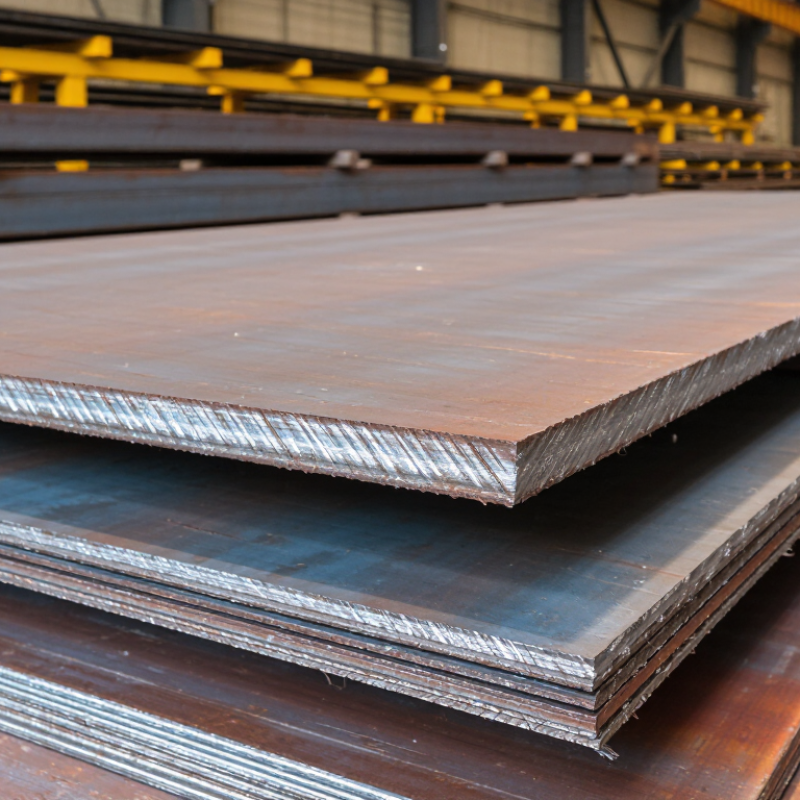
Define Design Loads and Strength Needs (ASTM A36: 36 ksi Yield up to 8 in.)
How to Choose the Right Hot Rolled Plate?
Define design loads before comparing plate grades. List dead load, live load, and applicable wind or seismic forces using ASCE/SEI 7-22, Minimum Design Loads and Associated Criteria for Buildings and Other Structures. Then identify the load path, support spacing, and likely failure modes. A plate spanning between supports may need checks for bending and deflection, not yield strength alone.
Small details matter.
ASTM A36/A36M specifies a minimum yield strength of 36 ksi (250 MPa) for plate up to 8 inches thick. For plate over 8 inches, the specified minimum drops to 32 ksi. That is a material threshold, not a safe working stress.
AISC 360-22 provides design requirements for steel structures, including strength checks under LRFD and ASD methods. Compare the required capacity with the selected plate’s thickness, span, connections, and restraint conditions.
A neat spreadsheet will not catch every bad assumption. Recheck units, load combinations, and whether the plate can buckle before reaching yield; this is easy to overlook.
These references establish a sound starting point, but project-specific calculations still determine suitability.
Compare Steel Grades (ASTM A572 Grade 50: 50 ksi Yield up to 4 in.)
ASTM A572 Grade 50 is a common choice when a hot rolled plate needs higher strength than Grade 36. For plate up to 4 inches thick, its specified minimum yield strength is 50 ksi. That figure describes the point where steel begins to deform permanently; it is not a complete measure of structural capacity. Check the applicable ASTM edition and the material test report, especially when thickness approaches the limit.
Compare grades against the actual load, plate dimensions, and fabrication process. A higher-strength grade may allow a thinner plate, but thinner material is not automatically cheaper or better. Connections, buckling, impact conditions, and welding requirements can change the calculation. Grade 36 may suit a less demanding design, while Grade 50 can offer useful strength without moving to a more specialized alloy. Details matter.
Review certified mill documentation for chemistry, tensile results, and thickness. Confirm that the supplied plate matches the project specification, rather than relying only on a grade label. Welding deserves attention: follow the approved procedure and consider thickness and joint restraint when assessing preheat needs. I would not choose by yield strength alone; it is an easy shortcut, and sometimes the wrong one. A qualified engineer should verify the final selection.
Select Plate Thickness and Dimensions Within ASTM A6/A6M Tolerances
Choosing a hot rolled plate starts with its intended fit, load, and fabrication process.
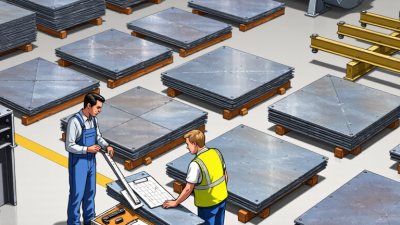
ASTM A6/A6M provides dimensional tolerances for covered structural steel products, including plate. It does not promise that every measured dimension will exactly match the nominal size. Check the applicable thickness and width tables for the ordered dimensions and standard edition. Small differences matter. A plate near the permitted thickness limit may affect fit-up, machining allowance, or calculated weight.
State the required thickness, width, and length clearly in the purchase order. Consider flatness too; it is easy to focus on thickness and overlook a plate that rocks on the shop floor. Check the standard’s applicable limits, and request tighter tolerances only when the project needs them and they are agreed in advance.
For incoming checks, use suitable measuring tools on clean surfaces, and follow the measurement locations specified by the standard. Keep the purchase order and inspection records together. One practical caution: tolerance is an acceptance range, not a guarantee that every plate will sit at the nominal dimension. Allow for that variation when planning cuts and assemblies.
Assess Surface Condition, Flatness, and Mill Scale Before Use
How to Choose the Right Hot Rolled Plate?
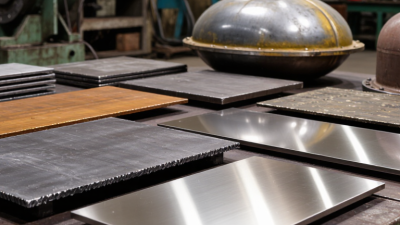
Check the surface under bright, angled light. Look for pits, seams, laminations, and sharp edges that may affect cutting or welding. ISO 8501-1 classifies steel surfaces from A to D: Grade A retains mostly adherent mill scale, while Grade D shows general pitting. These grades describe visible rust and scale, not internal quality. A clean-looking plate can still need further inspection.
Flatness matters when the plate must sit flush in a fixture or form a straight assembly. Measure across the plate with a straightedge, and compare results with the tolerance in the purchase specification. ASTM A6/A6M provides dimensional tolerances for structural steel plates, but the applicable limits depend on product dimensions and requirements. Mill scale can shield the surface temporarily, yet loose scale may interfere with coating adhesion or welding preparation. Don’t assume it will stay put.
Tips: Photograph defects before cutting, and mark their locations. Check both faces and edges. If the application is critical, request suitable inspection rather than relying on visual checks alone.
Verify Heat Traceability and Mechanical Tests on the Mill Test Report
How to Choose the Right Hot Rolled Plate?
A mill test report is more than a page of numbers. It connects the plate you receive to the heat from which it was made. Check that the heat number on the report matches the marking on the plate or its shipping tag. If markings are faint, photograph them before cutting or moving the material. A neat report can still have a gap. Pause if the heat number is missing, altered, or inconsistent across documents, and ask the supplier to clarify it before acceptance.
Review the reported chemistry and mechanical results against the grade and purchase requirements. Pay close attention to yield strength, tensile strength, and elongation; these figures describe different aspects of performance. Confirm that units, test direction, and test method are clear. Results should be tied to the stated heat, not merely presented as generic values. A useful check is to compare the report with the order and inspection records side by side. Small mismatches are easy to overlook, especially when several plate sizes arrive together.
Tips: Keep a photo of each plate marking with its report. Check for missing test values, unclear units, or mismatched heat numbers. If something does not line up, hold the plate for review rather than guessing.
How to Choose the Right Hot Rolled Plate? - Verify Heat Traceability and Mechanical Tests on the Mill Test Report
| MTR Reference |
Heat Number |
Plate ID |
Grade and Standard |
Plate Dimensions (mm) |
Yield Strength (MPa) |
Tensile Strength (MPa) |
Elongation (%) |
Test Method |
Verification |
| MTR-26-0418 |
H68421 |
PL-001 |
ASTM A572/A572M Grade 50 |
12 × 2,000 × 6,000 |
372 |
485 |
24 |
ASTM A370 |
Pass |
| MTR-26-0419 |
H68422 |
PL-002 |
ASTM A572/A572M Grade 50 |
16 × 2,000 × 6,000 |
365 |
492 |
23 |
ASTM A370 |
Pass |
| MTR-26-0420 |
H68423 |
PL-003 |
ASTM A572/A572M Grade 50 |
20 × 2,000 × 6,000 |
358 |
478 |
25 |
ASTM A370 |
Pass |
Representative sample data for illustration only; this is not a supplier-issued mill test report. For ASTM A572 Grade 50, the listed yield and tensile results exceed the commonly specified minimums of 345 MPa and 450 MPa, respectively. Confirm elongation requirements against the applicable product thickness, specimen, and ordered specification. Match the heat number on the MTR to the plate marking and purchase documentation.