Leave Your Message
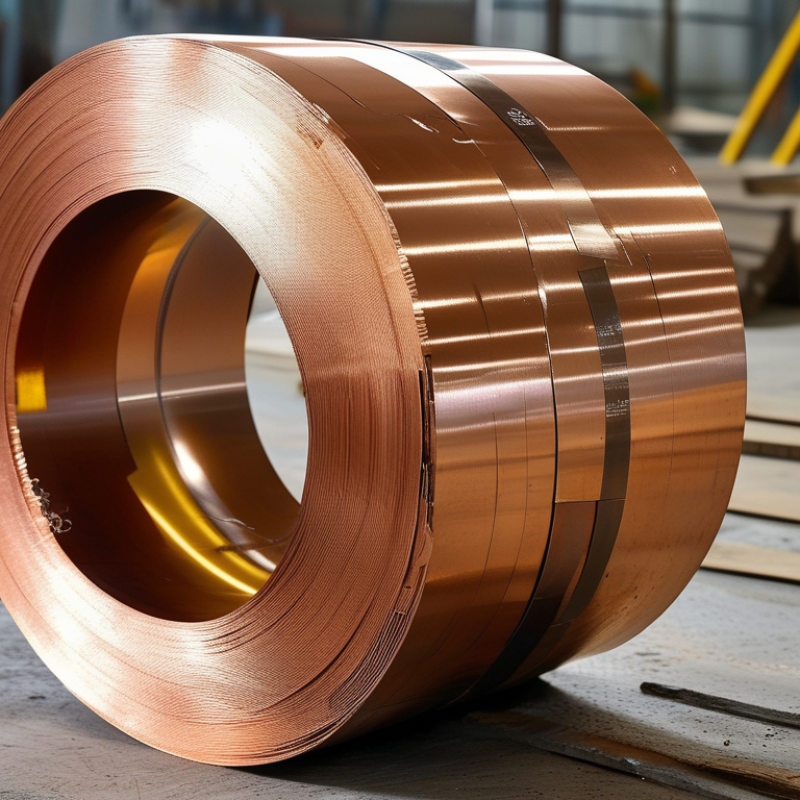
Choosing a reliable Copper Strip manufacturer requires more than comparing prices on a supplier website. Global buyers must examine alloy grades, thickness tolerance, width accuracy, electrical conductivity, surface quality, and delivery consistency. These details become visible when a strip is unwound, stamped, bent, or installed inside a connector.
Dr. Robert C. H. Leach, a recognized copper-alloy specialist, once offered a practical warning: “Copper performance depends on consistency, not appearance alone.” This view remains valuable. A bright coil may still hide uneven edges, variable hardness, or weak documentation. Buyers should request mill certificates, inspection records, RoHS and REACH declarations, and clear packaging specifications. Small details matter.
This guide, “China Top 10 Copper Strip Manufacturers for Global Buyers,” focuses on manufacturers with relevant production experience, export capability, and measurable quality systems. It considers copper and copper-alloy options, including C11000, C10200, brass, phosphor bronze, and customized grades. It also reviews annealing control, slitting accuracy, coil protection, minimum order quantities, and communication practices.
A strong supplier should answer technical questions without vague promises. Samples help, but they do not reveal every production risk. That is worth remembering.
The ranking is not a permanent verdict. Market conditions change. Equipment upgrades, raw-material sourcing, and management decisions can quickly affect results. Buyers should verify current certificates, factory capabilities, and sample performance before signing a contract. This approach supports practical decisions, especially when a failed Copper Strip shipment could stop a stamping line or delay an international project.
China Top 10 Copper Strip Manufacturers for Global Buyers
What Defines a Reliable Copper Strip Manufacturer in China
A reliable copper strip manufacturer proves quality through repeatable production, not attractive promises. Buyers should examine alloy grades, thickness tolerance, width accuracy, and surface condition. A dependable factory can provide recent mill certificates and traceable batch records. These documents should match the shipped coils, not older samples.
Production experience becomes visible in small details. Check whether the manufacturer controls rolling temperature, annealing cycles, edge burrs, and coil tension. Ask for sample strips cut from current production. Measure them with calibrated tools. Look closely at scratches, discoloration, waviness, and uneven edges. Export experience also matters, especially for packaging and moisture protection. Strong suppliers explain their inspection process clearly. Vague answers deserve caution.
Tips: Request a sample, inspection report, and production video. Confirm the copper grade before discussing price. Ask how rejected material is handled. A factory that welcomes reasonable audits often values long-term cooperation. Still, no supplier is perfect. Even an experienced producer may face delays, equipment maintenance, or material variation. That is why clear specifications and written corrective procedures are essential. I would also compare several production batches, rather than trusting one successful sample. Reliability is earned through consistent evidence, responsive communication, and honest limitations.
| Profile | Primary Product Focus | Common Copper Grades | Typical Thickness Range | Typical Width Range | Temper Options | Electrical Conductivity | Applicable Standards | Quality & Export Indicators |
|---|---|---|---|---|---|---|---|---|
| Supplier Profile 01 | Precision copper strip for electrical connectors and terminals | C11000C10200C12200 | 0.05–2.00 mm | 10–600 mm | Quarter-hard, half-hard, hard | Typically 97–101% IACS, depending on grade and temper | ASTM B152/B152M; EN 1652; JIS H3100 | Coil traceability, thickness checks, burr control, export packing |
| Supplier Profile 02 | Transformer, motor, and power-distribution copper strip | C11000C10200 | 0.10–3.00 mm | 20–800 mm | Soft, half-hard, hard | Up to approximately 100–101% IACS for high-conductivity grades | ASTM B152/B152M; IEC 60228-related conductor requirements where applicable | Conductivity testing, surface inspection, coil ID, moisture-resistant packaging |
| Supplier Profile 03 | Radiator, heat-exchanger, and HVAC strip | C11000C12200 | 0.08–2.50 mm | 15–700 mm | Annealed, quarter-hard, half-hard | Generally 97% IACS or higher, subject to alloy and processing | ASTM B152/B152M; EN 1652; EN 1172 | Flatness control, surface cleanliness, dimensional inspection, export labeling |
| Supplier Profile 04 | Battery, busbar, and renewable-energy electrical strip | C11000C10200C10100 | 0.10–2.00 mm | 20–500 mm | Soft, half-hard, hard | Approximately 100% IACS for C11000; higher values may apply to oxygen-free copper | ASTM B152/B152M; EN 1652; RoHS requirements when specified | Lot-based chemical analysis, conductivity records, clean-room-compatible packing options |
| Supplier Profile 05 | Stamped parts, clips, springs, and electronic components | C11000C12200C14500 | 0.05–1.50 mm | 5–400 mm | Quarter-hard, half-hard, hard, spring temper | Typically 85–100% IACS, depending on alloy selection | ASTM B152/B152M; EN 1652; JIS H3100 | Edge-burr limits, hardness reports, repeatability data, slitting inspection |
| Supplier Profile 06 | Large-width copper strip for industrial fabrication | C11000C10200C12200 | 0.30–4.00 mm | 100–1,200 mm | Soft, half-hard, hard | Generally 97–101% IACS for commercially pure copper grades | ASTM B152/B152M; EN 1652; GB/T 2059 | Mill certificates, coil-weight control, flatness measurement, seaworthy packing |
| Supplier Profile 07 | Tinned, nickel-plated, or surface-treated copper strip | C11000C10200 | 0.10–2.00 mm before coating | 10–600 mm | Soft, half-hard, hard | Base-metal conductivity commonly ranges from 97–101% IACS | ASTM B545 for tin coating where applicable; ASTM B152/B152M | Coating-thickness checks, adhesion testing, salt-spray testing when required |
| Supplier Profile 08 | Oxygen-free copper strip for vacuum and high-frequency applications | C10100C10200 | 0.08–2.00 mm | 10–500 mm | Soft, quarter-hard, half-hard | Commonly around 100–101% IACS, with controlled oxygen content | ASTM B152/B152M; ASTM B170; EN 1652 | Oxygen analysis, vacuum-compatible cleanliness, heat-number traceability |
| Supplier Profile 09 | Custom slit coils for automotive and industrial OEM components | C11000C12200C14500 | 0.05–2.50 mm | 5–800 mm | Annealed, half-hard, hard, spring temper | Typically 85–100% IACS, determined by alloy and temper | ASTM B152/B152M; EN 1652; customer-specific PPAP requirements | Statistical process control, first-article inspection, barcode traceability |
| Supplier Profile 10 | General-purpose copper strip for international stockists and fabricators | C11000C10200C12200 | 0.10–3.00 mm | 20–1,000 mm | Soft, quarter-hard, half-hard, hard | Usually 97–101% IACS for high-conductivity copper grades | ASTM B152/B152M; EN 1652; JIS H3100; GB/T 2059 | ISO 9001-based quality system, MTC provision, inspection before dispatch |