Global buyers entering the 2026 market need more than a familiar shape. They need a Square Pipe that matches loading, climate, fabrication methods, and local supply conditions. Carbon steel remains a practical choice for frames, supports, gates, and industrial equipment. Galvanized Square Pipe offers stronger protection where rain, humidity, or road salt is unavoidable. Stainless steel suits food-processing areas, coastal installations, and clean architectural finishes. Aluminum versions reduce weight, although they require careful attention to strength and joining methods.
Dr. Jeffrey A. Packer, a respected researcher in hollow structural sections, has stated, “The most efficient structural solution is not always the lightest section.” This principle matters when buyers compare wall thickness, outside dimensions, grade, coating, and production tolerances. A low-cost pipe can become expensive after cutting losses, welding delays, or early corrosion. Check the details.
For global procurement teams, the 2026 selection process should include mill certificates, dimensional inspection, weld quality, coating thickness, and traceable testing records. Confirm whether the product follows ASTM, EN, JIS, or another accepted specification. A rectangular alternative may perform better in some connections, even when the project brief says square. That possibility deserves honest review.
Market demand is also shifting toward recyclable materials, lower-carbon production, and digitally documented supply chains. Yet sustainability claims can remain vague. Buyers should request measurable data, not attractive slogans. This guide compares major Square Pipe types, their practical advantages, limitations, and purchasing risks. It does not pretend one material fits every project. Real job sites are less tidy than catalogues suggest.
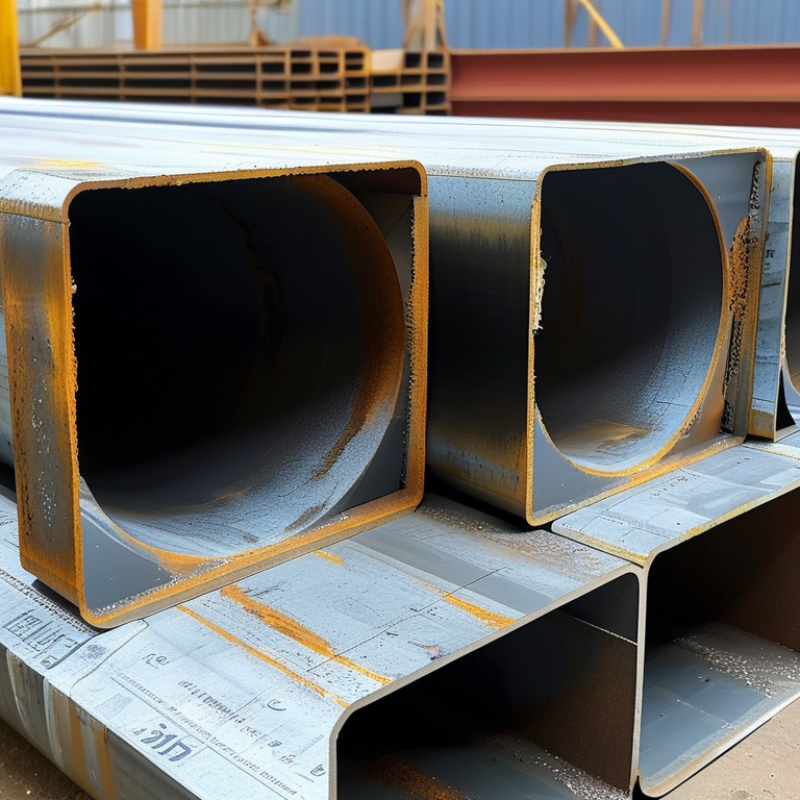
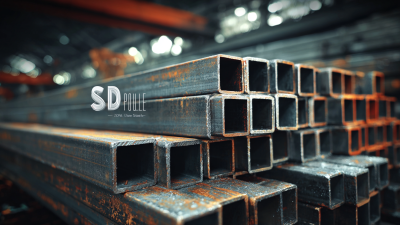
Square pipes are hollow steel sections with four equal sides and flat faces. Their clean geometry supports stable loads, neat joints, and efficient space use. Common grades include carbon steel, stainless steel, and galvanized steel. Wall thickness, outside size, length, and surface treatment must match the application.
Global buyers choose square pipes because they simplify fabrication. Flat faces make cutting, drilling, welding, and alignment more predictable. They fit frames, warehouse racks, gates, solar supports, furniture, and light structural assemblies. A 50 mm square section, for example, can create a compact frame with fewer complicated connections. It also stacks efficiently in containers, which can reduce handling effort and shipping space.
In practical sourcing, dimensions alone are not enough. Buyers should check the standard, steel grade, tolerance, weld quality, coating thickness, and test documents. Small deviations can complicate assembly. Rust may also appear after transport if packaging is weak. That part is often underestimated. Square pipes are not automatically the best choice for every load; engineers must review buckling, corrosion exposure, and connection strength. Samples and independent inspection add confidence, although they increase time and cost. Reliable purchasing depends on clear drawings, traceable production records, and honest communication about limitations.

Material selection controls strength, corrosion resistance, weight, and long-term maintenance. Carbon steel square pipe suits frames, supports, machinery bases, and general construction. Galvanized steel adds a zinc coating for outdoor exposure, though damaged areas still need attention. Stainless steel works well in humid, sanitary, or visually demanding environments. Aluminum square pipe reduces weight and resists corrosion, but it offers different load behavior than steel. Choose carefully.
Shape also affects performance. Standard equal-sided square pipe provides balanced support and clean assembly. Thin-wall precision pipe fits furniture, light enclosures, and automated equipment. Heavy-wall structural pipe handles higher loads and rougher service. Corner radius matters more than many buyers expect. Larger radii can improve forming strength, while smaller radii may support tighter connections. Rectangular pipe is not square pipe, but it may suit one-direction loading better.
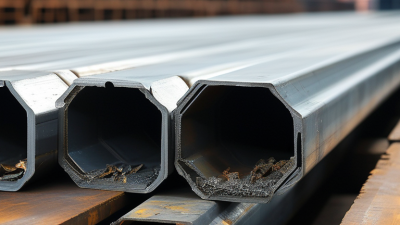
Manufacturing methods create practical differences. Electric-resistance-welded pipe offers consistent dimensions and efficient production for many structural uses. Seamless square pipe can provide uniform integrity, but it usually costs more and may require special forming. Hot-formed pipe supports demanding applications, while cold-formed pipe often delivers sharper corners and better dimensional control. Check wall thickness at the corners, not only the catalog value. A polished specification can still fail in real service if tolerances, coating damage, weld quality, or transport handling are overlooked. Recheck the application before ordering.
2026 Top Square Pipe Types for Global Buyers
Square pipes are selected by production method, steel grade, dimensions, and service conditions. Cold-formed welded sections suit many structural frames because they offer consistent shapes and efficient material use. Hot-finished sections may perform better under demanding temperatures or heavier loads. Seamless square pipes exist, but they are less common and often cost more.
Key specifications must be written clearly in the purchase order. Include outside dimensions, wall thickness, length tolerance, corner radius, straightness, and surface condition. A 100 × 100 mm pipe with a 4 mm wall is not interchangeable with a 3.2 mm wall. It matters. Buyers should also define steel grade, yield strength, tensile strength, elongation, and impact requirements. Measure twice.
Applicable standards depend on the destination and application. EN 10219 covers many cold-formed welded structural hollow sections, while EN 10210 addresses hot-finished sections. ASTM A500 is widely used for structural tubing in relevant markets. Confirm the latest edition with the project engineer. Certificates should identify heat numbers, chemical composition, mechanical test results, and dimensional inspection. EN 10204 3.1 documentation can improve traceability. Weld inspection, coating thickness, and galvanizing requirements should be agreed before production. No checklist is perfect. Some buyers still overlook corner cracking after forming, especially when pipes are bent or welded onsite. Sample inspection, independent testing, and clear acceptance criteria reduce that risk.
Minimum specified yield strength of widely used structural square hollow sections
Yield strength is a key specification for comparing structural square pipes. The values shown are representative minimum requirements for commonly referenced grades: ASTM A500 Grade B, EN 10210/10219 S355J2H, JIS G3466 STKR400, and GB/T 6725 Q355B. Actual requirements may vary by wall thickness, product condition, test method, and applicable edition of the standard. Buyers should also verify dimensions, corner radius, tolerances, impact requirements, surface condition, welding quality, and inspection documents.
Comparing square pipe performance starts with steel grade, wall thickness, and manufacturing method. Welded carbon-steel pipe usually offers the lowest purchase cost. Cold-formed hollow sections can provide tighter dimensions and cleaner corners. Galvanized pipe adds zinc protection for humid sites, while stainless steel suits aggressive chemical or coastal environments. It costs more upfront.
The World Steel Association reported 1,839.4 million tonnes of crude steel production in 2024. This scale supports broad availability, but regional supply still affects delivery time and pricing. Buyers should compare price per usable metre, not price per tonne. A lighter pipe may reduce freight costs, yet it can deflect more under load. Check yield strength, buckling resistance, weld quality, and dimensional tolerance against ASTM A500 or EN 10219 requirements.
Application changes the calculation. Construction frames often favor carbon-steel hollow sections with protective coating. Agricultural structures may need galvanizing where moisture remains trapped. Food-processing areas usually demand stainless steel and documented surface quality. Ask for mill certificates, coating thickness records, and independent inspection results. These documents expose inconsistencies.
A cost model should include cutting, welding, coating repair, maintenance, and replacement risk. The cheapest quotation can become expensive after premature corrosion. Still, lifecycle estimates are not perfect. Local humidity, installation skill, and inspection quality can change the result. Compare three equivalent designs before selecting the pipe type.
Selecting reliable square pipe suppliers requires more than comparing prices. Global buyers should match the pipe type to the application, including carbon steel, galvanized, stainless steel, or hollow structural sections. A warehouse frame may need high-strength carbon steel, while outdoor railings often require stronger corrosion protection. Confirm the required grade, outer dimensions, wall thickness, corner radius, and length before requesting quotations.
Ask suppliers for current mill certificates, chemical analysis, tensile results, and dimensional inspection records. These documents should identify the heat number and connect it to the delivered bundle. Check whether testing follows recognized standards and whether an independent laboratory can verify selected batches. A professional supplier should explain tolerances clearly, not hide behind broad phrases such as “premium quality.” Request production photos showing straightening, welding, surface treatment, and final packing.
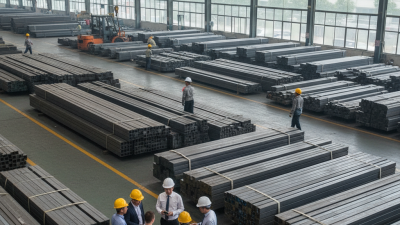
Visit the facility when order value justifies it. Look for calibrated gauges, clean storage, labeled materials, and protection against rainwater. One missed millimeter can disrupt assembly. A common purchasing mistake is trusting a polished website before checking traceability. No checklist is perfect. I would also order samples, inspect weld seams and cut ends, and compare actual weight with theoretical weight. Discuss packaging, loading methods, export documents, and claims handling in writing. If answers change between sales and technical staff, pause the order and investigate further.
| Square Pipe Type | Typical Material or Grade | Common Production Method | Common International Standards | Typical Applications | Main Advantages | Key Buyer Checks |
|---|---|---|---|---|---|---|
| Carbon Steel Structural Square Pipe | Carbon structural steel, commonly grades such as ASTM A500 Grade B or C | Electric-resistance welded (ERW) cold-formed or hot-finished production | ASTM A500, EN 10219, JIS G3466, GB/T 6725 | Building frames, machinery supports, guardrails, agricultural structures and general fabrication | Good strength-to-weight ratio, broad availability and easy welding or fabrication | Specified grade, yield and tensile strength, wall thickness, weld quality, dimensional tolerance and mill test certificate |
| Galvanized Square Pipe | Carbon steel with a zinc coating applied by hot-dip galvanizing or electro-galvanizing | ERW tube production followed by galvanizing, or galvanized coil forming | ASTM A500 with applicable zinc-coating requirements, EN 10219 with coating specification, ISO 1461 for hot-dip galvanized coatings | Outdoor fencing, handrails, solar support structures, agricultural facilities and utility frameworks | Improved atmospheric corrosion resistance compared with uncoated carbon steel | Zinc-coating mass or thickness, coating uniformity, damaged-area repair method, drainage holes and salt-spray requirements where applicable |
| Stainless Steel Square Pipe | Austenitic stainless steel such as 304/304L or 316/316L; ferritic grades may also be used for selected applications | Cold-formed welded or seamless production, followed by annealing, pickling or polishing when specified | ASTM A554, ASTM A312 for relevant seamless or welded pressure-tube applications, EN 10217-7 for welded stainless tubes | Food-processing equipment, architectural structures, chemical facilities, clean environments and coastal installations | High corrosion resistance, hygienic surface options and good appearance | Exact alloy, carbon content, surface finish, weld discoloration, intergranular-corrosion requirements and positive material identification when required |
| Aluminum Square Tube | Common structural alloys include 6061-T6 and 6063-T5/T6, subject to application requirements | Extrusion, followed by cutting, heat treatment and optional machining or surface finishing | ASTM B221, EN 755 and EN 10215 where applicable to extruded aluminum products | Lightweight frames, transport equipment, display systems, solar structures and architectural components | Low density, natural corrosion resistance, clean appearance and easy handling | Alloy and temper, extrusion straightness, wall uniformity, surface finish, mechanical properties and compatibility with fasteners |
| Hot-Finished Square Hollow Section | Structural carbon steel, often supplied to grades defined by the applicable regional standard | Hot finishing after forming or production from hot-finished feedstock | EN 10210 and other project-specified structural hollow-section standards | Load-bearing columns, trusses, bridges, industrial frames and heavily loaded structures | Suitable for demanding structural applications and available in larger sections and thicker walls | Design temperature, impact toughness, section class, corner radius, weldability, inspection level and traceability |
| Cold-Formed Square Hollow Section | Structural carbon steel or low-alloy steel formed from strip or plate | Cold forming and longitudinal ERW welding, followed by sizing and straightening | EN 10219, ASTM A500 and JIS G3466, depending on the purchasing region | General construction, equipment frames, fencing, supports and fabricated assemblies | Efficient production, consistent external dimensions and competitive pricing for common sizes | Corner geometry, residual stress considerations, weld seam inspection, straightness, end squareness and actual wall thickness |
| Precision Square Tube | Cold-rolled carbon steel, stainless steel or aluminum selected according to dimensional and surface requirements | Precision forming, high-frequency welding, sizing, drawing or additional calibration | EN 10305 series, ASTM A513 for applicable mechanical tubing and project-specific precision-tube specifications | Automotive components, furniture, automation equipment, telescoping assemblies and precision machinery | Tighter dimensional control and better surface quality than standard structural tube | Dimensional tolerance, concentricity, surface roughness, burr control, straightness and inspection sampling plan |
| Seamless Square Pipe | Carbon, alloy or stainless steel, depending on pressure, temperature and corrosion requirements | Seamless round tube production followed by forming, sizing or specialized manufacturing | Application-specific seamless-tube standards; the required standard must be confirmed before purchase | Specialized mechanical components, high-temperature service and applications where a welded seam is unsuitable | No longitudinal weld seam and potential suitability for specialized service conditions | Manufacturing route, heat treatment, nondestructive testing, pressure or mechanical requirements, dimensional availability and cost justification |
| Evaluation Dimension | What a Reliable Supplier Should Provide | Recommended Buyer Evidence | Risk if Not Verified |
|---|---|---|---|
| Standard and Grade Compliance | Clear identification of the product standard, steel grade, delivery condition and applicable tolerances | Approved technical data sheet, product marking and heat-specific mill test certificate | Material may not meet the structural, mechanical or corrosion requirements of the project |
| Dimensional Accuracy | Control of outside dimensions, wall thickness, corner radius, straightness and end squareness | Inspection report based on calibrated measuring equipment and agreed sampling frequency | Assembly problems, excessive machining, unstable fit-up and higher installation costs |
| Weld and Surface Quality | Defined weld-seam quality, surface condition, edge treatment and repair procedures | Visual inspection records, weld-test results and agreed acceptance criteria | Cracking, leakage, premature corrosion or poor coating adhesion |
| Testing and Traceability | Traceable links between raw material, production batch, inspection results and shipment documents | Heat number, batch number, test reports and independent inspection option where required | Difficult claims handling and inability to prove compliance after delivery |
| Coating and Corrosion Protection | Documented coating type, coating thickness or mass, preparation method and repair standard | Coating inspection report, sample measurements and agreed visual reference | Early rusting, uneven appearance and reduced service life in outdoor conditions |
| Production Capacity and Lead Time | Confirmed capacity for the required sizes, wall thicknesses, quantities and delivery schedule | Written production plan, realistic lead time and confirmed packaging or container-loading method | Partial shipment, schedule delays, substitutions or unplanned logistics costs |
| Export Documentation | Commercial invoice, packing list, certificate of origin and inspection documents suitable for the destination market | Pre-shipment document sample and confirmation of required customs information | Customs clearance delays, document discrepancies and avoidable import charges |
| Packaging and Handling | Moisture-resistant, load-secure packaging designed to prevent deformation and surface damage | Packaging specification, loading photographs and agreed marking requirements | Bent sections, scratched coatings, mixed sizes and receiving difficulties |
| Pre-Production Sample Approval | Ability to provide samples or trial production before mass manufacturing | Sample dimensional report, surface review and signed approval record | Large-volume delivery may differ from drawings or approved specifications |