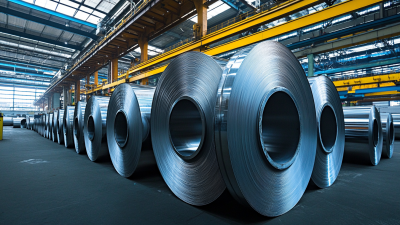
Global sourcing decisions often begin with a simple question: why choose Cold Rolled Coils instead of other flat steel products? The answer lies in consistency, surface quality, and reliable forming performance. Cold Rolled Coils pass through controlled reduction processes after hot rolling. This creates tighter thickness tolerances and a smoother finish. These qualities matter when manufacturers produce automotive panels, electrical cabinets, appliances, and precision components.
Details decide the result. A purchasing team should examine grade, width, thickness, surface condition, coil weight, edge quality, and oiling requirements. EN 10130, ASTM A1008, and equivalent specifications may support different applications. Yet standards alone cannot guarantee a successful shipment. Ask for mill test certificates, inspection records, packaging photographs, and production references. I have seen sourcing plans weaken when buyers ignored inner diameter or underestimated port handling limitations. Small oversights become expensive quickly.
Edwin Basson of worldsteel has described steel as “a permanent material.” That idea supports a careful sourcing strategy. Cold Rolled Coils can serve demanding industries for years, but only when procurement matches engineering requirements. Suppliers should explain their rolling capacity, quality controls, claim procedures, and realistic lead times. Transparent communication builds confidence across borders. Not every low quotation is efficient. Sometimes, it hides weaker tolerances, inconsistent coating, or uncertain delivery.
There is no perfect supplier.
Global buyers should compare total landed cost, not only the mill price. Freight, insurance, duties, storage, inspection, and rejected material all affect value. A disciplined evaluation can turn Cold Rolled Coils from a basic commodity into a dependable manufacturing advantage. Still, assumptions deserve review. Markets change, specifications differ, and yesterday’s reliable route may not remain reliable tomorrow.
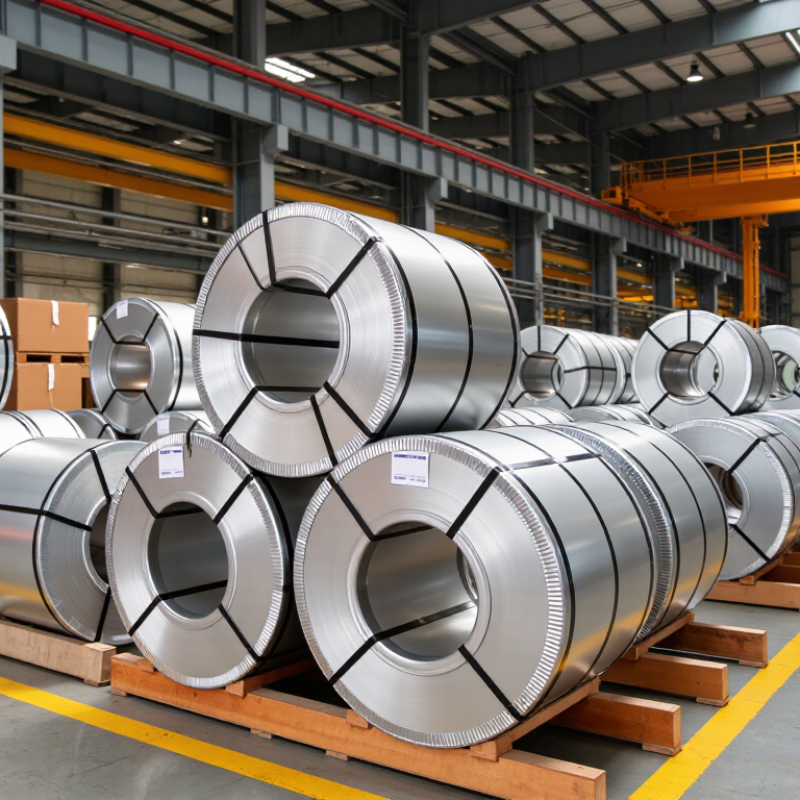
Why Choose Cold Rolled Coils for Global Sourcing?
Cold rolled coils are low-carbon steel sheets reduced at room temperature after hot rolling and pickling. The process removes surface scale and tightens dimensional control. Unlike hot rolled material, cold rolled coil usually offers a smoother surface, thinner gauges, and more consistent thickness. It is not simply “hot rolled steel, but better.” The application decides the value.
During production, uncoiled strip passes through high-pressure work rolls. Rolling may be followed by annealing, skin passing, and tension leveling. Annealing restores ductility after deformation, while skin passing improves flatness and surface appearance. A practical inspection should check coil edges, telescoping, rust marks, and thickness variation. Small defects can become visible after painting or stamping.
The World Steel Association reported approximately 1.89 billion tonnes of crude steel production in 2023, showing the scale of the sourcing market. Its World Steel in Figures data also highlights steel’s central role across construction, transport, and manufacturing. For buyers, key properties include yield strength, tensile strength, elongation, surface finish, and dimensional tolerance. Galvannealed or coated products may suit different corrosion requirements, but coating compatibility needs verification. That step is often underestimated.
Cold rolled coils support appliance panels, automotive components, furniture, and precision fabrication. Reliable sourcing requires reviewing mill certificates, inspection records, packaging design, and storage conditions. ISO 16120-2 and relevant ASTM specifications can help define mechanical and dimensional requirements. Still, standards do not replace sampling. A coil can meet the paper specification and fail a forming trial. That possibility deserves attention.
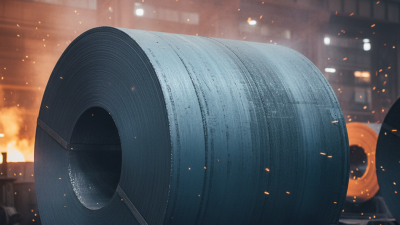
Cold rolled coils suit precision manufacturing because their surfaces and dimensions are tightly controlled after hot rolling. In practice, this means cleaner panels, sharper bends, and fewer adjustments on stamping lines. EN 10130 specifies requirements for cold rolled low-carbon steel used in forming applications. Thickness tolerance still depends on grade and supply agreement.
The production scale is significant. World Steel Association’s World Steel in Figures 2024 reports 1.89 billion tonnes of crude steel production in 2023. Such volume supports wider sourcing options, but volume alone does not guarantee consistency. Buyers should compare mill certificates, yield strength, tensile strength, elongation, flatness, and surface finish. A coil may look bright under warehouse lights yet reveal small scratches after painting.
Details matter most.
For precision parts, incoming inspection should measure thickness at several coil positions, not only at the edge. Surface roughness testing can expose risks before stamping begins. Reliable suppliers also provide traceable heat numbers and stable packing for ocean transport. The International Energy Agency notes that steel production remains responsible for roughly 7% of global energy-related emissions, making material efficiency increasingly relevant. Cold rolled coils can reduce rework and scrap, though this benefit must be verified with production data. A tighter tolerance may also increase cost, and buyers sometimes underestimate that trade-off.
Cold rolled coils offer tight dimensions, smooth surfaces, and dependable forming performance. These qualities matter when buyers source steel across different markets. Thickness, width, yield strength, tensile strength, and elongation should match the final application. A small tolerance error can affect stamping, welding, or assembly.
International specifications require clear documentation. Buyers commonly compare ASTM, EN, and JIS requirements with the supplier’s technical data. The purchase order should state thickness tolerance, width range, coil weight, inner diameter, outer diameter, and edge condition. Surface finish also needs definition, especially for painted, plated, or visible components. Bright, matte, and rough finishes are not interchangeable. Not every supplier explains this clearly.
Quality control should include heat numbers, inspection records, and mill test certificates. Independent inspection can verify chemistry, mechanical properties, dimensions, and surface condition before shipment. Packaging deserves attention too. Strong bands, waterproof wrapping, and protected coil edges reduce damage during ocean transport. I have seen specifications that looked complete but missed oiling requirements and allowable coil telescoping. That gap created avoidable questions. A practical sourcing process leaves room for technical review, sample approval, and corrective action. ISO-based quality systems can support consistency, but certificates alone never replace physical inspection.
Cold rolled coils can support stable purchasing when buyers need precise thickness, clean surfaces, and consistent forming performance. Their value is not limited to the quoted price. Procurement teams should compare yield, processing losses, packaging, inland transport, and port charges. A lower coil price may disappear after these additions.
Supply reliability also matters. Qualified suppliers should provide clear mill certificates, production schedules, inspection records, and traceable heat numbers. Buyers can reduce disruption by approving alternative sources before an urgent order arrives. Regional inventory may shorten delivery time, but it can also increase storage costs. Details matter.
Logistics planning begins with the coil itself. Eye direction, outer diameter, coil weight, moisture protection, and loading equipment affect safe handling. A container route may suit lighter coils, while heavier cargo might require specialized ocean transport. Buyers should check port congestion, customs documentation, insurance terms, and delivery responsibilities before signing. Small errors can delay production for weeks.
In practical sourcing work, forecasts are rarely perfect. Demand changes, vessels slip, and inspection findings sometimes require rework. Building reasonable buffer time helps, although excessive inventory ties up cash. The cheapest offer still deserves careful questioning. A transparent supplier with dependable communication may create more value than an impressive opening quotation.
Cold rolled coils suit global sourcing because their smooth surfaces, tight thickness, and clean edges support demanding fabrication. Yet material performance depends on supplier discipline, not the product label alone. I learned this after comparing coils that looked identical on paper but behaved differently during stamping. One showed edge cracking near the first bend. Small detail. Costly consequence.
Evaluate a supplier through traceable evidence. Request mill test certificates, heat numbers, dimensional records, and surface inspection photos. Verify that each document matches the coil tag and shipment details. Ask about grade standards, thickness tolerance, width range, coil weight, and packaging for ocean transport. A reliable supplier should explain inspection methods clearly, not hide behind general claims. Ask for a sample or trial order when specifications are critical. This may slow purchasing, but it exposes process weaknesses early.
Check production capacity, lead-time history, export experience, and response speed. Speak with technical staff, not only sales contacts. Their answers reveal practical knowledge. Review how they handle nonconformities, replacement requests, and moisture damage. A written quality agreement should define acceptance limits, claims evidence, and corrective timelines. Do not rely on price alone. I still sometimes overvalue a fast quotation, especially under pressure. That is a weakness worth correcting. Supplier selection needs records, factory verification, and repeated communication before a larger commitment.
| Evaluation Dimension | Why Cold Rolled Coils Are Preferred | Practical Reference Benchmark | Documents or Evidence to Request | Recommended Weight | Pass Indicator |
|---|---|---|---|---|---|
| Product Standards and Grade | Cold rolled steel offers controlled chemistry, consistent mechanical properties, and a smoother surface for forming, painting, and exposed applications. | The supplier should clearly quote the applicable standard and grade, such as EN 10130 for cold rolled low-carbon flat products or ASTM A1008/A1008M for commercial-quality sheet and coil. | Mill test certificate, product specification, chemical composition, mechanical-property results, and standard revision. | 20% | Standard and grade fully traceable |
| Thickness and Width Capability | Accurate thickness and width control improves part fit, reduces trimming waste, and supports stable downstream processing. | Common commercial sourcing ranges are approximately 0.20–3.00 mm in thickness and 600–2,000 mm in width; the exact range depends on the mill and grade. | Equipment capability list, dimensional inspection report, sample measurement records, and approved tolerance table. | 15% | Capability matches purchase specification |
| Dimensional Tolerance | Consistent tolerances minimize rejection, assembly problems, and variations in stamping or roll-forming operations. | Tolerances must be agreed according to the selected standard, nominal thickness, width, and order condition rather than using an unspecified “standard tolerance.” | Signed technical specification, tolerance chart, inspection plan, and actual coil measurement data from multiple positions. | 15% | Measured values meet the agreed standard |
| Surface Quality and Finish | The smooth, uniform surface of cold rolled coil is suitable for visible components, appliance panels, automotive parts, and further coating. | The order should define surface quality and finish, such as bright or matt appearance, oiling condition, roughness requirements, and acceptable limits for scratches, pits, roll marks, and rust. | Surface-quality standard, approved reference samples, inspection photos, surface roughness data, and coating or oiling specification. | 15% | Surface is consistent and defect-controlled |
| Mechanical Properties and Formability | Controlled yield strength, tensile strength, and elongation help maintain predictable bending, stamping, and deep-drawing performance. | For a typical low-carbon commercial-quality grade, representative values may include tensile strength around 270–410 MPa and elongation of about 28% or higher, subject to grade, thickness, and standard. | Heat-specific mechanical test results, tensile-test method, forming test records, and confirmation of the required delivery condition. | 15% | Properties meet the specified grade |
| Coil Packaging and Corrosion Protection | Proper packaging protects edges and surfaces during ocean transport, container handling, storage, and customs inspection. | Packaging should include moisture-resistant protection, secure strapping, edge protection, corrosion-prevention treatment when specified, and clearly marked coil identification. | Packaging specification, loading photographs, packing list, coil-marking format, and transport-risk assessment. | 10% | Packaging is suitable for international shipment |
| Traceability and Quality Control | Full traceability makes it easier to investigate nonconformities and verify that delivered coils match the approved production batch. | Each coil should be linked to a heat or cast number, production date, grade, dimensions, weight, inspection results, and certificate number. | Heat-number records, mill test certificates, calibration records, inspection procedures, and nonconformity reports. | 10% | Coil-to-certificate traceability is complete |
| Global Logistics and Delivery Reliability | Reliable supply planning reduces production interruptions and helps buyers control inventory and landed cost. | The supplier should provide a realistic lead time, confirmed production capacity, export documentation process, shipment schedule, and contingency plan for delays. | Historical delivery records, production schedule, commercial invoice, packing list, bill of lading process, and agreed Incoterms. | 5% | Delivery performance is documented |
| Commercial Transparency and Claim Handling | Clear commercial terms reduce hidden costs and provide a defined route for resolving quality or quantity disputes. | The quotation should separately identify steel price, processing charges, packaging, freight, insurance, payment terms, tolerance basis, and claim-response time. | Formal quotation, purchase contract, inspection clause, warranty terms, claim procedure, and replacement or credit policy. | 5% | Terms are written and measurable |
| Recommended supplier-selection method: score each dimension from 1 to 5, multiply by the recommended weight, and require all critical technical criteria to pass. | 100% | Use samples and trial orders before full-scale sourcing | |||