Global buyers are entering 2026 with more pressure on cost, consistency, and delivery reliability. According to the World Steel Association’s World Steel in Figures 2025, global crude steel production reached approximately 1.88 billion tonnes in 2024. This scale supports a deep supply base, but it also makes supplier selection more complicated. Not every mill offers the same cold-rolling precision, surface quality, or export capability.
This guide examines the 2026 Best Cold Rolled Coils suppliers through practical purchasing criteria. These include material grades, thickness tolerance, coil weight, surface finish, oiling, packaging, and inspection records. The OECD’s recent steel market analysis also highlights continuing concerns about excess capacity and uneven demand. Buyers should therefore verify production sources carefully, rather than trusting attractive quotations alone. A reliable supplier should provide mill test certificates, dimensional data, quality-system credentials, and clear shipment terms. Small details matter. A damaged edge can create major losses during stamping.
Supplier rankings are never completely universal. Automotive manufacturers may prioritize advanced high-strength grades, while appliance producers may need smooth surfaces and stable coating performance. Infrastructure buyers often focus more on volume, availability, and delivery schedules. This article compares leading suppliers against those different requirements, using published industry data and practical procurement experience. However, public reports cannot reveal every mill’s current production discipline. Buyers still need independent inspections, sample approval, and contract-level quality clauses before placing large orders. That caution may seem slow, but it is often cheaper than correcting an entire rejected shipment.
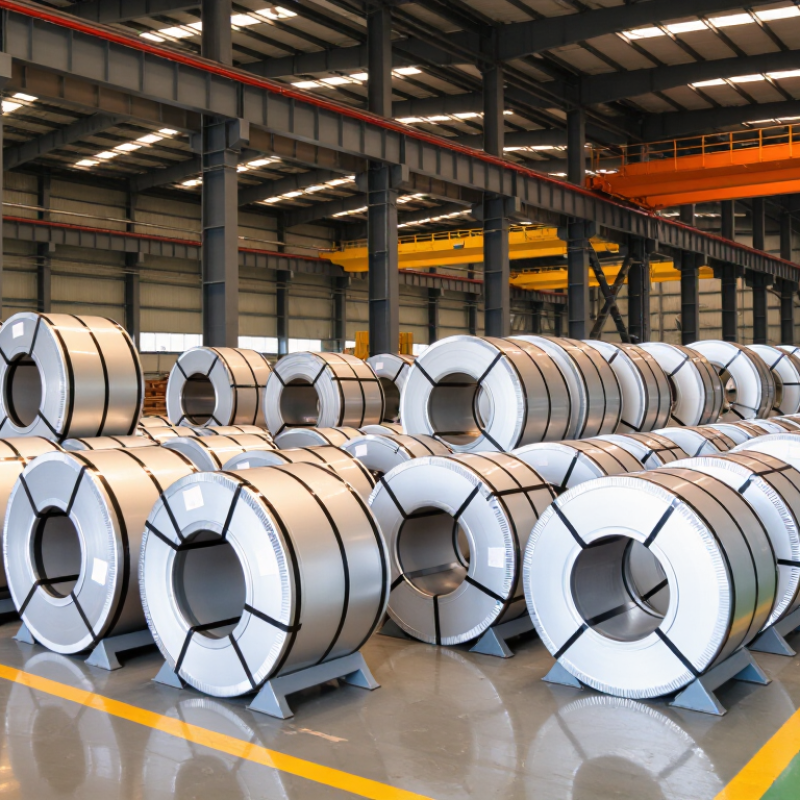
Cold rolled coil is selected by more than surface appearance. Thickness usually ranges from 0.15 to 3.0 mm, while common widths run from 600 to 2,000 mm. Thin gauges suit precise forming, appliance panels, and light fabrication. Thicker gauges provide better stiffness for structural parts. Small differences matter.
A reliable supplier should confirm thickness tolerance, width tolerance, coil weight, inner diameter, and edge condition before production. Ask for the applicable steel grade and a mill test certificate. Check yield strength, tensile strength, elongation, and chemical composition against your drawing. Surface finish also needs clear wording. Bright, matte, oiled, and non-oiled surfaces behave differently during painting and stamping. A sample coil or cut sheet can reveal scratches, waviness, or uneven edges that photographs hide.
Packaging deserves practical attention. Waterproof paper, firm strapping, protected coil eyes, and stable loading reduce damage during long transport. Experienced buyers also compare actual usable width, not only the quoted width. A 1,250 mm coil with poor edge quality may create more waste than a narrower, cleaner coil. This is easy to overlook. I would also question unusually low prices, because they may reflect weaker inspection or inconsistent tolerances. Yet certificates are not perfect proof; independent testing remains sensible for critical orders. Clear communication about delivery terms, inspection points, and replacement procedures makes international purchasing more dependable.
For global buyers, cold rolled coil quality begins with the correct standard, not a polished sales sheet. ASTM A1008 covers carbon and high-strength steel sheet classifications used in demanding applications. EN 10130 defines cold rolled low-carbon flat products for cold forming. JIS G3141 addresses cold-reduced carbon steel sheet and strip, including surface and forming requirements.
Details matter.
A reliable supplier should match the requested grade, thickness tolerance, width range, surface finish, and mechanical properties. Buyers should review mill test certificates, heat numbers, coil identification, and production dates. Tensile strength, yield strength, elongation, and hardness should align with the selected standard and grade. Surface inspection also deserves attention. Small scratches can become visible after stamping or painting.
Paperwork is not enough.
Experienced procurement teams often request samples before approving repeated orders. Independent testing can verify chemistry, dimensions, and mechanical performance when the application carries higher risk. Packaging should protect coils from moisture, edge damage, and shifting during ocean transport. Traceability must continue from heat number to shipping documents.
A practical concern remains: standards are sometimes interpreted differently across mills. Even correct certificates may hide unsuitable surface quality or inconsistent flatness. Buyers should define inspection methods in the purchase contract and clarify whether tolerances follow the standard edition currently in use. This extra step may slow purchasing, but it reduces disputes and costly production interruptions.
| Benchmark Area | ASTM A1008/A1008M | EN 10130 | JIS G3141 | Buyer Verification Evidence | Commercial Relevance |
|---|---|---|---|---|---|
| Standard scope | Cold-rolled carbon steel sheet in coils and cut lengths for general, forming, deep-drawing, structural, high-strength low-alloy, and solution-strengthened applications. | Cold-rolled low-carbon steel flat products for cold forming, normally supplied as sheet or coil. | Cold-reduced carbon steel sheet, strip, and coil for general-purpose and drawing applications. | Mill test certificate showing the exact standard, edition, grade, product form, and delivery condition. | Confirms that the quotation refers to the correct technical product rather than a generic “cold rolled” description. |
| Common grade designations | CS Type ACS Type BCS Type CDSDDSEDDSHSLA | DC01DC03DC04DC05DC06 | SPCCSPCDSPCE | Grade on the purchase order must match the grade printed on the certificate and coil identification. | Grade selection affects formability, surface quality, yield strength, and suitability for stamping. |
| Typical application level | General fabrication, automotive-related forming, appliance components, structural parts, and demanding drawing grades depending on the selected designation. | DC01 is generally used for basic forming; DC03–DC06 provide progressively higher forming capability for demanding applications. | SPCC is commonly used for general applications; SPCD and SPCE are intended for drawing applications with increasing formability. | Approved end-use specification, forming depth or draw geometry, and customer-side trial results where applicable. | Reduces the risk of selecting a grade that is chemically compliant but unsuitable for production forming. |
| Surface finish | Surface requirements depend on the specified ASTM product type and order requirements; surface quality should be defined separately in the purchase contract. | EN 10130 includes surface-quality designations such as A and B; B quality is used where a higher-quality surface is required. | JIS G3141 uses surface-finish classifications including FB, FC, and FD, with higher classifications intended for more demanding appearance requirements. | Surface designation, inspection method, permissible defects, oiling requirement, and sample approval record. | Important for exposed panels, painted parts, plating, appliance housings, and automotive visible surfaces. |
| Dimensional control | Thickness, width, length, flatness, and shape tolerances are controlled according to the applicable ASTM requirements and ordered dimensions. | Thickness, width, length, flatness, and shape tolerances are specified through EN 10131, which is commonly used with EN 10130 for dimensional tolerances. | Thickness, width, length, flatness, and shape tolerances are specified by the relevant JIS requirements and purchase details. | Measured dimensions, tolerance class, coil crown or flatness data where relevant, and inspection equipment calibration records. | Directly affects blanking yield, die setup, welding fit-up, and downstream processing cost. |
| Mechanical properties | Requirements vary by grade and product category; the certificate should report yield strength, tensile strength, and elongation where required. | Mechanical requirements vary by grade and are normally verified through yield strength, tensile strength, and elongation values. | Mechanical requirements vary by grade; tensile test results and, for drawing grades, relevant formability requirements should be checked. | Heat or cast number, test direction, test results, test standard, and laboratory authorization. | Provides a traceable link between the coil and the forming or strength requirement of the finished part. |
| Chemical composition | Carbon, manganese, phosphorus, sulfur, and other elements depend on the selected grade and product category. | Low-carbon chemistry is specified by grade; exact limits must be checked against the ordered grade and edition of the standard. | Carbon, manganese, phosphorus, sulfur, and other limits depend on the ordered JIS grade. | Heat analysis and product analysis, with all reported elements compared against the applicable grade limits. | Supports weldability, forming consistency, coating performance, and metallurgical traceability. |
| Delivery condition | Usually supplied cold rolled and may be ordered with specified surface, edge, oiling, and packaging requirements. | Delivery condition and surface treatment should be stated in the order, including suitable oiling and surface-quality requirements. | Delivery details should define surface finish, oiling, edge condition, coil condition, and packaging. | Purchase order, packing list, coil tags, photographs before shipment, and loading inspection report. | Prevents disputes over edge trimming, oiling, packaging damage, and coil identification. |
| Certification package | Certificate of conformity or inspection certificate referencing ASTM A1008/A1008M and the ordered grade. | Inspection certificate referencing EN 10130, with dimensional tolerances commonly linked to EN 10131. | Inspection certificate referencing JIS G3141 and the exact ordered grade and surface classification. | Certificate, test reports, traceability records, nonconformance procedure, and document-retention policy. | Essential for customs clearance, customer audits, regulated industries, and supplier qualification. |
| Evaluation Dimension | Recommended Benchmark | Documents or Data to Request | Suggested Weight | Pass Indicator |
|---|---|---|---|---|
| Standard compliance | Supplier clearly identifies ASTM A1008/A1008M, EN 10130, or JIS G3141 grade and does not substitute an equivalent without written approval. | Technical offer, certificate template, product data sheet, and standard edition reference. | 25% | Every coil can be matched to a defined grade and standard. |
| Traceability | Coil number, heat or cast number, production date, weight, dimensions, and certificate data remain linked through shipment. | Sample coil tag, mill test certificate, packing list, and traceability workflow. | 20% | No gap exists between the physical coil marking and the test certificate. |
| Dimensional consistency | Actual thickness and width remain within the agreed standard tolerance and purchase-order tolerance. | Inspection records, measuring-device calibration certificates, and third-party inspection option. | 15% | Inspection results cover the full ordered dimensional range. |
| Surface quality | Surface class, oiling, edge condition, and permissible defect criteria are agreed before production. | Surface photographs, approved reference samples, inspection plan, and packaging specification. | 15% | Surface acceptance criteria are measurable and included in the contract. |
| Formability performance | Grade selection corresponds to the actual bending, stamping, drawing, or roll-forming requirement. | Mechanical test results, forming trial records, and customer-approved technical specification. | 10% | Trial parts meet the agreed forming and appearance requirements. |
| Export readiness | Supplier can provide compliant packaging, export documents, clear marking, and shipment inspection support. | Commercial invoice, packing list, certificate of origin, loading photographs, and packaging drawings. | 10% | Documents are consistent with the buyer’s customs and logistics requirements. |
| Quality response | Nonconformities are documented, investigated, and closed through a corrective-action process. | Complaint procedure, corrective-action template, response-time commitment, and sample closure report. | 5% | Supplier provides a documented root-cause and corrective-action process. |
Grade selection starts with yield strength, not a supplier’s sales promise. For light forming, 270–340 MPa grades usually provide useful ductility and smooth bending. These grades suit appliance panels, cabinets, and general fabrication. The surface should remain clean, even, and free from visible coil marks. Small details matter.
For light forming, 270–340 MPa grades usually provide useful ductility and smooth bending. These grades suit appliance panels, cabinets, and general fabrication. The surface should remain clean, even, and free from visible coil marks.
Grades from 350–550 MPa offer a practical balance between strength and formability. They fit vehicle components, brackets, frames, and reinforced equipment panels. However, higher strength can increase springback after pressing.
Grades from 550–690 MPa support demanding structural applications with reduced material weight. They require stricter control of thickness, edge quality, elongation, and weld performance.
I have seen drawings fail because engineers ignored this behavior. A larger bend radius or adjusted tooling may prevent cracking.
Do not select 690 MPa simply because it sounds stronger. It may raise forming costs and reduce production flexibility. Test the actual coil lot before approving volume orders.
Review the mill certificate, heat number, tensile results, dimensional tolerances, and surface requirements. Independent testing can add confidence for international shipments.
Ask whether the supplier can maintain consistent yield strength across different thicknesses. That answer often reveals more than a catalog.
Mistakes still happen. Clear specifications and traceable records make them easier to detect.
For global buyers comparing cold rolled coil suppliers in 2026, due diligence should begin with verifiable production evidence. An ISO 9001 certificate shows a quality management system, not automatic product perfection. Check the certificate number, issuing body, validity dates, and covered manufacturing site. The scope should include steel processing, not only sales or warehousing. Ask for the latest audit findings when possible. Some suppliers provide polished documents but avoid specific answers. That is a warning sign.
Mill Test Certificates require closer review. Match the coil number, heat number, grade, thickness, width, chemical analysis, yield strength, tensile strength, and elongation with your purchase specification. Confirm the testing standard and laboratory method. A credible certificate should connect the test results to the actual production heat. Traceability should continue from molten steel to slab, rolling line, finished coil, and shipping documents. Request sample records before placing a large order. In practice, one missing coil identifier can create expensive confusion at the receiving warehouse. I have seen teams trust a spreadsheet too quickly. That mistake is easy to repeat. Arrange a remote document review or an independent inspection when risk is high. Keep photographs of labels, packaging, and scale readings. Supplier reliability is built through consistent evidence, not confident promises.
Buying cold rolled coils internationally requires more than comparing a mill price. For a 20–25 t load, confirm coil width, thickness, inner diameter, surface grade, oiling, and packing before requesting offers. One overlooked tolerance can create slitting losses or a rejected container. Details matter. MOQ varies by specification, not only by supplier capacity. Some suppliers accept one trial coil, while others require several coils or a full production batch. Ask whether the MOQ applies per size, grade, or total order.
A practical lead-time check separates production time from shipping time. Request material availability, rolling schedules, inspection timing, and port cut-off dates. Ready stock may ship within 7–14 days, while production orders often need 25–45 days. These ranges are not promises. Holidays, vessel delays, and document corrections can add days. I would leave a small buffer, although buyers sometimes underestimate this cost. A clear inspection plan also helps, covering thickness checks, coil weight, surface defects, and certificate accuracy.
Incoterms directly affect landed cost and risk. Under FOB, the buyer usually controls ocean freight after loading. Under CFR or CIF, the seller arranges main carriage, while risk still transfers at shipment. FCA can suit containerized cargo when the buyer manages the forwarder. Confirm who pays inland transport, export clearance, insurance, unloading, and destination charges. Keep the commercial invoice, packing list, mill certificate, and inspection report aligned. A low offer can become expensive when one charge remains unclear.
Global Procurement: 20–25 t Loads, MOQ, Lead Times, and Incoterms
Mill-direct cold rolled coil orders commonly start at approximately 20 metric tonnes, although service-center purchases may allow smaller quantities.
A 20–25 metric tonne shipment is a practical planning range for a full export load, subject to coil dimensions, port rules, and container or truck limits.
FOB, CFR, CIF, and DAP are frequently evaluated. Buyers should confirm who covers inland transport, insurance, customs clearance, and destination charges.
The chart shows practical procurement benchmarks rather than company-specific quotations. Actual lead times depend on specification approval, production scheduling, inspection, port congestion, and destination customs.