Leave Your Message

China Top 10 Galvalume Coil Suppliers for Global Buyers?

Choosing a Galvalume Coil supplier is not just a price comparison. Buyers also need to check coating specifications, base-metal thickness, coil width, and available finishes. A small difference in coating mass can affect corrosion performance and service life. Ask for current technical data sheets and inspection records, rather than relying on a product description alone.

This guide introduces ten suppliers for global buyers to research and compare. It considers practical factors such as production capability, export experience, quality controls, minimum order quantities, and communication. Details can vary by product and shipment. Verify them directly. Request samples when feasible, and confirm tolerances, packaging, lead times, and shipping terms before placing an order. Certifications may be relevant, but their scope and validity should be checked with the supplier or issuing body. No supplier list can replace that work. A polished website is not proof of consistent coil quality. Buyers should also compare quotations on the same specifications, or the lowest offer may not be the best value. Some information may change over time, so treat this overview as a starting point—not a final verdict.
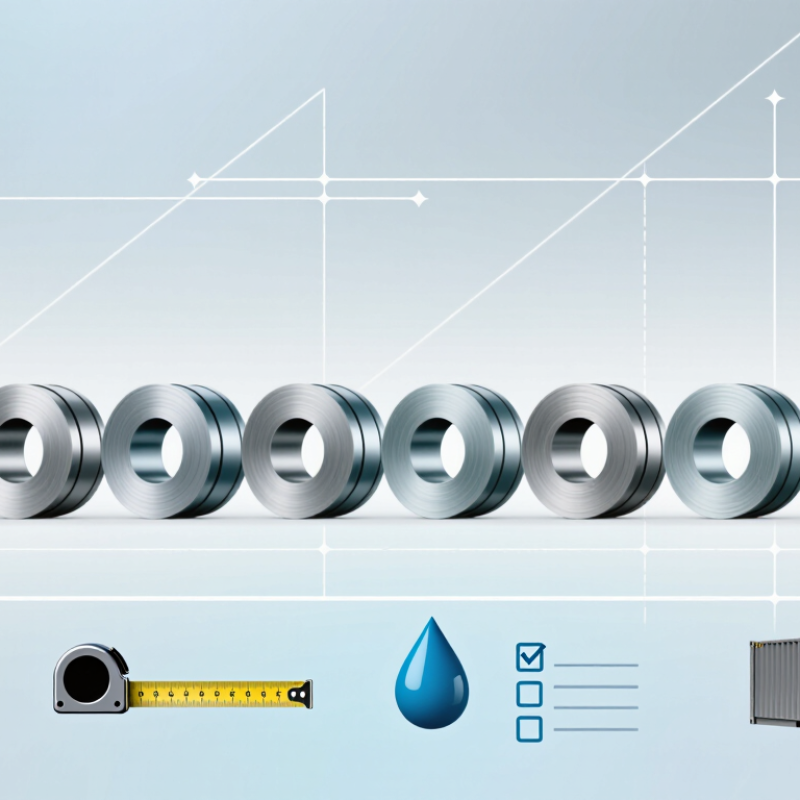
China Top 10 Galvalume Coil Suppliers for Global Buyers?

What Galvalume Coil Is and How It Is Made

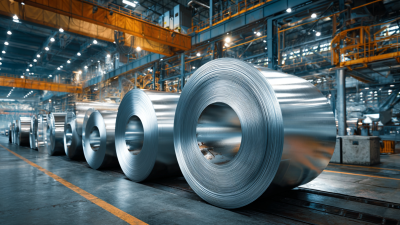
Galvalume coil is steel sheet coated with an aluminum-zinc alloy. The steel core provides strength, while the metallic coating helps resist corrosion and heat. A common coating formulation contains about 55% aluminum, 43.4% zinc, and 1.6% silicon by weight. Exact specifications can vary by product and production standard. The surface often has a fine, crystalline pattern. It is functional, not just decorative.

Production begins with cleaning the steel strip to remove oil and scale. The strip is then heated and passed through a bath of molten aluminum-zinc alloy. Air knives control the coating thickness as the strip exits the bath. It is cooled, inspected, and recoiled for shipment. That layer matters. In real use, forming, handling, and storage can affect the finish; results are not always flawless. Cut edges may also corrode sooner than coated surfaces, so application conditions deserve attention.

Tips: Check coating mass, thickness, and surface condition against the project specification. Ask how the coil was protected during storage, and inspect a sample before ordering large volumes. A small test can reveal issues early.
Key Grades, Coatings, Specifications, and Applications

Selecting a galvalume coil starts with the intended forming work. Commercial-quality grades suit general bending and roll forming, while structural grades support specified strength requirements. For deeper drawing, confirm the grade and forming limits with the mill; a familiar designation alone does not guarantee identical performance.

The coating is typically an aluminum-zinc-silicon alloy, valued for corrosion resistance and heat reflectivity. Buyers may encounter ASTM A792 coating designations or EN 10346 grades such as DX51D+AZ. Check the applicable standard and coating mass, commonly stated in grams per square metre across both sides.

Details matter. Also specify base-metal thickness, width, tolerance, surface finish, and whether the coil is oiled or passivated. Those small choices affect welding, painting, and storage.

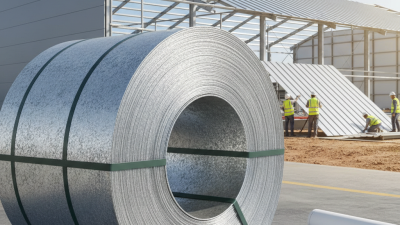
Roofing and wall cladding are common uses, especially where long-lasting exterior panels are needed. Coils also serve HVAC components, agricultural buildings, and appliance housings. Cut edges can corrode sooner than coated surfaces, so fabrication details matter in wet or coastal settings.

I have seen purchase sheets list a coating mass but omit the intended forming radius. That gap is easy to miss—and worth correcting before production. A supplier’s data sheet should be checked against the finished part, not just the coil label.

How to Evaluate Galvalume Coil Suppliers in China

China’s Top 10 Galvalume Coil Suppliers for Global Buyers?

How to Evaluate Galvalume Coil Suppliers in China

Choosing a Galvalume coil supplier takes more than comparing prices. Start with the product specification: base-metal thickness, coating mass, width tolerance, and surface finish. Ask for a recent mill test certificate and confirm that its figures match the quoted coil. Check whether the supplier can trace each coil by identification number. A polished sample helps, but it cannot prove every shipment will be consistent. Details matter.

Tips: Request a small trial order when practical. Compare the delivered thickness and coating data with the agreed specification. Ask how coils are wrapped, protected at the edges, and secured for transport. Clear answers are useful; vague promises are not.

Review production capacity and realistic lead times, especially for repeat orders. Ask how the supplier handles specification changes, damaged packaging, or delayed shipments, and get the agreed process in writing. Check references from buyers with similar requirements, while remembering that one positive review is not proof of reliable performance. A spreadsheet can look convincing; the first delivery may still reveal gaps. I would also check whether the contact person responds clearly to technical questions. That is not a perfect test, but poor communication early on can become an expensive problem later.

Profiles of 10 Chinese Galvalume Coil Suppliers

China’s Galvalume coil supply base benefits from a large steel industry. World Steel Association’s World Steel in Figures 2024 reports that China produced 1,019.1 million tonnes of crude steel in 2023. This figure indicates industrial scale, not Galvalume capacity or product quality. Buyers should verify coating composition, thickness tolerances, and mill test certificates for each order. Details matter.

The ten profiles below describe supplier types, not a ranked or independently verified company list:

  1. integrated mills, with upstream steelmaking;
  2. coating specialists, focused on Al-Zn coating consistency;
  3. export-oriented mills, familiar with overseas packing needs;
  4. regional producers, often serving nearby ports;
  5. service centers, able to slit or cut coils;
  6. private manufacturers, offering varied order sizes;
  7. construction-focused suppliers, familiar with roofing applications;
  8. appliance-grade suppliers, where surface finish needs close checking;
  9. trading-led suppliers, whose sourcing routes require clarification;
  10. custom-processing suppliers, suited to specified widths and coil weights.

These differences are not guarantees. Ask for recent inspection records, sample labels, and written tolerances. Check coil edges for damage. One overlooked point: confirm whether quoted coating mass refers to both surfaces or one.

How Global Buyers Can Compare Quotes and Manage Orders

A galvalume quote is comparable only when the specification matches. Check the steel grade, thickness and tolerance, width, coating mass, surface finish, and required packaging. “AZ150” alone is not a complete specification; confirm the applicable standard and inspection documents. Ask for coil weight limits, inner diameter, edge condition, and whether the surface is oiled or passivated. Small differences matter. A tidy quote sheet can still hide awkward details, so request a line-by-line breakdown of material price, freight, insurance, and any extra charges. Compare the same delivery term and destination port. The World Steel Association’s World Steel in Figures 2024 reports 1,892.2 million tonnes of crude steel production in 2023, showing the scale of the market—but not guaranteeing a particular supplier’s capacity or delivery date.

Before placing an order, confirm production lead time, minimum order quantity, payment milestones, quote validity, and the process for handling shortages or damage. Request a mill test certificate and a sample inspection plan before production, then agree how deviations will be recorded. UNCTAD’s Review of Maritime Transport 2024 reports that maritime trade grew 2.4% in 2023. Freight schedules can still shift, so ask suppliers to separate mill readiness from vessel departure and estimated arrival. Get it in writing. Track each coil by number, weight, and shipment document, and check packing photos before loading. One weak point in many buying plans is relying on a single arrival estimate; even a well-managed order can slip.

Galvalume Coating Composition: A Baseline for Comparing Supplier Quotes

A typical Galvalume coating is approximately 55% aluminum, 43.4% zinc, and 1.6% silicon by weight. Use this as a material reference when comparing quotes, and confirm each supplier’s coating specification and test documentation.