Leave Your Message
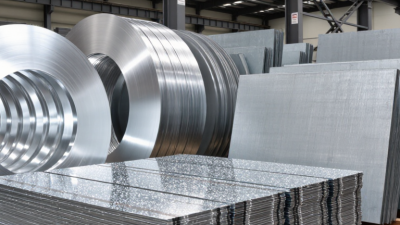
A Galvanized Plate can look uniform on a warehouse rack, yet its performance depends on details buyers may not see at first glance. A thin coating, uneven edges, or the wrong grade can change how a plate handles cutting, forming, and outdoor exposure. Small details matter.
The World Steel Association’s World Steel in Figures 2024 reports that global crude steel production reached about 1.89 billion tonnes in 2023. That figure describes the wider steel industry, not galvanized plate sales, but it shows the scale of the supply chain behind your purchase. For coating requirements, buyers should consult applicable product specifications, such as ASTM A653 for sheet products, and confirm that the specification matches the material being offered. Terminology can vary by supplier. Check the product description carefully.
Tom Langill, Ph.D., a galvanizing specialist associated with the American Galvanizers Association, has emphasized the importance of matching coating performance to the service environment. In practical terms, his guidance can be summarized this way: choose protection for the conditions the steel will face. This is a paraphrase, not a verbatim quotation. That distinction matters when technical advice is quoted.
These seven tips focus on what to verify before ordering: steel grade, coating designation, thickness, surface condition, tolerances, documentation, and supplier consistency. Ask for the inspection records. Check the edges. Compare the written specification with the delivered plate. Price matters, of course, but the lowest quote may leave costly questions unanswered.

ASTM A653/A653M is a key specification to check when buying hot-dip coated steel sheet. It covers zinc-coated sheet, commonly called galvanized, and zinc-iron alloy-coated sheet, often called galvannealed. The standard describes requirements for the coated product, but the designation on a quote needs careful reading. Small details matter.
Check the steel grade, coating designation, and ordered thickness together. These choices affect forming, corrosion resistance, and fit. Also confirm whether thickness refers to the base steel or the coated sheet, and whether dimensions follow inch-pound or SI units. Ask for the material test report and compare its stated specification and coating details with the purchase order. A label alone is not enough.
One common mistake is treating a heavier coating as the answer to every exposure condition. It may not be. Consider where the sheet will be used, whether it will be cut or bent, and how its edges will be protected. ASTM A653/A653M helps define what is being supplied; it does not replace application-specific engineering judgment. And “plate” can be an imprecise term: verify that the ordered product is sheet and that its thickness and tolerances suit the job.
| No. | Buying Tip | What to Specify or Check | Why It Matters |
|---|---|---|---|
| 1 | Identify the sheet standard | Call out ASTM A653/A653M and the applicable edition in the purchase specification. It covers steel sheet coated by the hot-dip process with zinc (galvanized) or zinc-iron alloy (galvannealed). | The standard helps define the product requirements; “galvanized” alone may not fully describe the material required. |
| 2 | Choose the steel grade | Specify the required ASTM A653/A653M steel grade and any applicable chemistry or mechanical-property requirements. Confirm that the grade suits the forming and structural demands of the part. | Strength, ductility, and formability depend on the selected grade; coating designation does not define the steel grade. |
| 3 | Set the coating type and designation | For zinc-coated sheet, state the required coating designation, such as G30, G60, or G90, when appropriate. These designations represent coating-weight classes; for example, G90 corresponds to a nominal total of 0.90 oz/ft² (about 275 g/m²) across both surfaces. | A clear designation helps align the order with the intended corrosion-protection requirements. It is not a guarantee that each surface has an equal coating mass. |
| 4 | Define thickness correctly | State the required thickness and clarify whether it is base-metal thickness or coated-sheet thickness. Include the applicable tolerance and measurement basis in the order. | Thickness conventions can affect fit, mass, and part dimensions. Do not assume all suppliers interpret a thickness callout the same way. |
| 5 | Specify sheet or coil dimensions | Give the required width and length for cut sheets, or width and coil details for coil stock. ASTM A653/A653M does not establish one universal size for every order. | Explicit dimensions and tolerances help prevent material that cannot be processed or fitted as intended. |
| 6 | Check surface and finish requirements | State any required surface condition, spangle or finish expectations, and whether the sheet will be painted, formed, or used as supplied. Confirm suitability for the intended finishing process. | Appearance and paint performance can depend on surface condition and subsequent processing; requirements should be agreed before ordering. |
| 7 | Request documentation and verify the order | Request material test documentation when required, and check that it identifies the ordered standard, grade, coating designation, and dimensions. Confirm packaging and delivery requirements as well. | Reviewing the paperwork against the purchase order helps identify specification mismatches before the material enters production. |