Leave Your Message

7 Tips for Buying Square Pipe

Buying Square Pipe can look simple until a frame twists, a weld pulls unevenly, or a shipment arrives with the wrong wall thickness. The right choice depends on more than the outside dimensions. Steel grade, manufacturing method, tolerances, finish, and intended load all affect performance. Small details matter.

Engineer Theodore von Kármán once said, “Scientists study the world as it is; engineers create the world that has never been.” His words are not about Square Pipe specifically, but they offer a useful buying principle: match the material to the job, rather than choosing by appearance or price alone. A 50-by-50-millimeter tube may seem suitable on a drawing, yet its wall thickness and grade can change how it behaves under load. Measure carefully. Ask for the specification sheet, inspection records, and clear confirmation of dimensions before ordering.

This guide shares seven practical tips for comparing suppliers and avoiding common purchasing mistakes. You’ll look at sizing, steel grade, production quality, surface condition, documentation, pricing, and delivery. Pay attention to the details you can verify, such as straightness, corner consistency, and visible rust or dents. Some jobs need tighter tolerances; others do not. I have learned that buyers sometimes focus too heavily on price, then discover that cutting, welding, or rework costs more than expected. That is easy to overlook. The tips ahead can help you ask better questions, though no checklist replaces checking the actual requirements of your project.
7 Tips for Buying Square Pipe

Identify the Application and Load Requirements

7 Tips for Buying Square Pipe

Identify the Application and Load Requirements

Start with the job, not the catalog size. A fence rail, machine frame, and roof support face different loads. Record the clear span, load direction, support points, vibration, and possible impact. Note whether people may stand beneath the assembly. A 50 mm square tube can seem rigid in a short mock-up, then twist across a longer span. Details matter. Include connection plates and fasteners in your assessment; a strong tube can still be limited by a weak joint.

Ask suppliers to identify the steel grade and actual wall thickness. ASTM A500/A500M specifies a minimum yield strength of 50 ksi (345 MPa) for Grade C square and rectangular tubing. That figure is useful, but it is not a safe working-load rating. AISC 360-22 design provisions also account for member geometry and stability; capacity can change with unsupported length, buckling, and off-center loading. I would not size a tube from yield strength alone. If the load is uncertain, record how it was estimated and have a qualified engineer check the design. Guesswork looks tidy on a purchase order. It is less reassuring above a busy work area.
Choosing Square Pipe: Section Area by Size

Compare common square hollow-section sizes when assessing an application and its load requirements.

Cross-sectional areas are calculated from the listed nominal outside dimensions and wall thicknesses, assuming a uniform wall and sharp corners. A larger area alone does not determine load capacity: material grade, unsupported length, end support, loading direction, and connection details also matter. Confirm the design with applicable specifications or a qualified engineer.

Select the Appropriate Material and Grade

A square tube’s material should match its surroundings and the job it must do. Carbon steel is often a practical choice for frames and general structural work, while stainless steel may suit damp or corrosive settings. Aluminum is lighter, but its strength and joining behavior differ from steel. Don’t choose by material name alone. Check the specified grade and product standard, since grades can differ in strength, chemistry, and intended use. For structural tubing, confirm that the grade meets the project’s design requirements.

Think about the actual conditions: Will the tube sit outdoors? Carry a steady load, or face vibration? Be welded on site? These details affect both material and grade selection. A common mistake is focusing on wall thickness while overlooking the grade. Small differences matter. For example, a heavier tube is not automatically a better match if its material properties or fabrication requirements are unsuitable. Ask the supplier for test documentation and verify that it identifies the grade and relevant standard. Check the paperwork. There is rarely a perfect choice; cost, corrosion resistance, weight, and weldability may pull in different directions. It’s worth checking your assumptions against the design specification before ordering.

Choose Pipe Dimensions and Wall Thickness

Choosing square pipe begins with the outside dimensions, not the label on a quote. A 50 mm square section with a 3 mm wall has a different usable interior and weight from one with a 4 mm wall. Confirm whether dimensions are nominal or measured, and check the supplier’s tolerance data. Small difference. Big effect. For structural HSS, the AISC Specification for Structural Steel Buildings (ANSI/AISC 360-22, Section B4.2) uses a design wall thickness of 0.93 times nominal thickness for covered products. A nominal 3 mm wall therefore gives a 2.79 mm design thickness under that rule. Don’t assume nominal equals design thickness.

Match thickness to the actual load, unsupported length, and connection details. A thin wall may dent around a bolt or weld; a heavier wall adds weight and can complicate fabrication. ASTM A500/A500M lists a 50 ksi minimum yield strength for Grade C square and rectangular HSS, but strength alone does not determine the right size. Ask for the grade and mill test report, then check the section against the applicable design method. I still verify corner radii and inside clearance before ordering; those details are easy to overlook on drawings.

Check Manufacturing Quality and Certifications

When buying square pipe, do not judge quality by a clean surface alone. Check that the corners are even, the ends are square, and the wall thickness matches the stated specification. A bright finish can hide thin spots or rough weld seams. Ask for the mill test certificate and confirm that its grade, dimensions, and heat number match the material supplied. Small details matter.

Tip: Compare the certificate with the pipe’s label or bundle tag before accepting delivery. Check that the document identifies the producer, material grade, test results, and production batch. A certificate is useful only when it covers the specific pipe you are buying. If the numbers do not match, pause and ask for clarification.

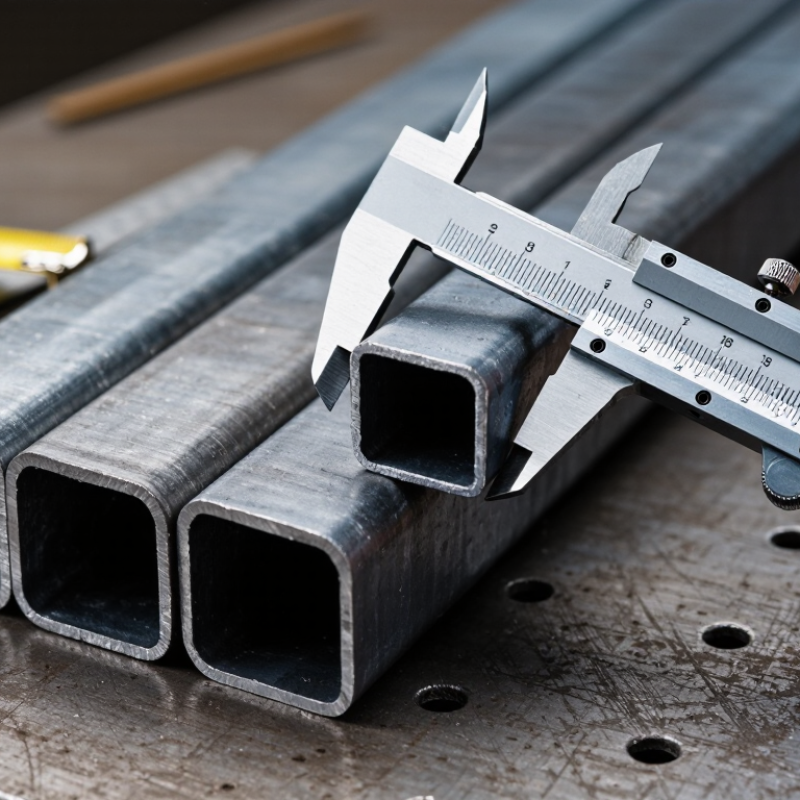
Certifications can support confidence, but their scope matters. Verify the issuing organization and confirm that the listed standard suits your project and destination. Requirements may differ by use, so do not assume one certificate covers every application. If tolerances are critical, measure several pieces with calipers and inspect the inside seam where accessible. A small sample check helps, though it cannot replace documented testing. I would also record any dents or coating damage on arrival; it is easy to overlook one. Ask the supplier how they maintain batch traceability and handle rejected material.

7 Tips for Buying Square Pipe — Check Manufacturing Quality and Certifications

No. What to Check How to Verify It Why It Matters
1 Confirm the material grade and standard Specify the required steel grade, product standard, dimensions, and intended use in the purchase documents. Check that the mill test certificate identifies the same grade and standard. Grades and product standards define different chemical, mechanical, and dimensional requirements. Requirements should match the application and local regulations.
2 Review manufacturing and inspection records Ask for a certificate of conformity and, where applicable, a mill test certificate. Compare the heat or batch number on the documents with the pipe markings and shipment records. Traceable records help confirm that the supplied material belongs to the stated production batch and was assessed against the specified requirements.
3 Measure dimensions and wall thickness Check outside width and height, wall thickness, length, and corner shape with suitable measuring tools. Compare results with the order specification and the tolerances in the applicable standard. Dimensional variation can affect fit-up, load calculations, fabrication, and installation. Tolerances depend on the product standard and ordered size.
4 Inspect weld seams and surface condition Visually examine the longitudinal seam, edges, and surfaces for visible cracks, open seams, deep dents, severe corrosion, or other defects. Request the specified non-destructive testing records if required by the order. Visual checks can identify obvious damage, while any additional weld inspection should follow the applicable specification and agreed inspection plan.
5 Check straightness and squareness Inspect sample lengths on a flat surface and measure the sides and diagonals where appropriate. Use the dimensional limits stated in the relevant product standard or purchase specification. Excessive bow, twist, or out-of-square ends may complicate cutting, joining, and alignment during installation.
6 Verify the certification scope Check that any quality-management or product certification is current and applies to the manufacturing site, product type, and standard being purchased. Verify documents with the issuing body when necessary. A certificate is useful only when its scope and validity match the product and production covered by the order. Certification does not replace product-specific inspection records.
7 Agree on inspection, packing, and delivery details Document the inspection criteria, sampling plan, required test reports, marking, protective packaging, quantity, and delivery condition before placing the order. Inspect the shipment and labels on receipt. Clear acceptance and delivery requirements reduce misunderstandings and help protect pipe from handling damage, moisture, and contamination in transit or storage.

Note: Apply the product standard and tolerances stated in the purchase specification. Requirements can vary by material grade, manufacturing method, size, and intended application.

Compare Suppliers, Pricing, and Delivery Terms

Tip: Compare suppliers using the same written specification. List the outside dimensions, wall thickness, steel grade, cut length, finish, and acceptable tolerances. Ask whether inspection documents are available with the order. A cheaper quote may exclude cutting or packing, so check what the price actually covers. Details matter.

Tip: Compare the full delivered cost, not only the price per length. Request separate figures for material, cutting, packaging, and freight. Check minimum order quantities and whether mixed lengths affect the rate. If one quote seems unusually low, ask what assumptions shaped it. Small exclusions can change the total.

Tip: Confirm delivery terms before placing an order. Ask for the dispatch date, estimated transit time, delivery location, and how delays are communicated. Check whether the truck can reach your site and unload safely. Get key terms in writing. A delivery estimate is not a guarantee, and schedules can shift. Leave room in your project plan. It is easy to focus on price and overlook timing; that is a mistake worth reviewing before approval.