Choosing a Copper Strip manufacturer is not simply a search for the lowest quotation. Buyers must examine conductivity, alloy composition, temper, thickness tolerance, surface quality, and delivery reliability.
Andrew G. Kireta Jr., President and CEO of the Copper Development Association, offers a useful perspective: “Copper’s value is measured across its entire life cycle, not only at purchase.” This principle matters when a strip enters a transformer, battery component, heat exchanger, or precision connector. A small edge crack can interrupt stamping. Uneven hardness can create costly production adjustments. A bright surface may still hide poor dimensional control.
This guide reviews ten Copper Strip manufacturers serving global buyers. It considers technical capability, production scale, inspection practices, certifications, export experience, and customer support. The comparison also looks at copper grades, rolled widths, coil weights, packaging, and traceability. Those details matter when a coil travels thousands of kilometres before reaching a factory floor.
No ranking is perfect. Public supplier information can be incomplete, outdated, or presented too generously. Buyers should verify mill certificates, sample results, audit records, and actual lead times before placing a large order. A supplier with impressive equipment may still struggle with communication or small-batch flexibility.
The strongest manufacturers combine stable metallurgy with disciplined rolling and careful packing. Their coils should arrive clean, level, protected, and ready for processing. This list is designed to support a more informed shortlist, not replace technical due diligence.
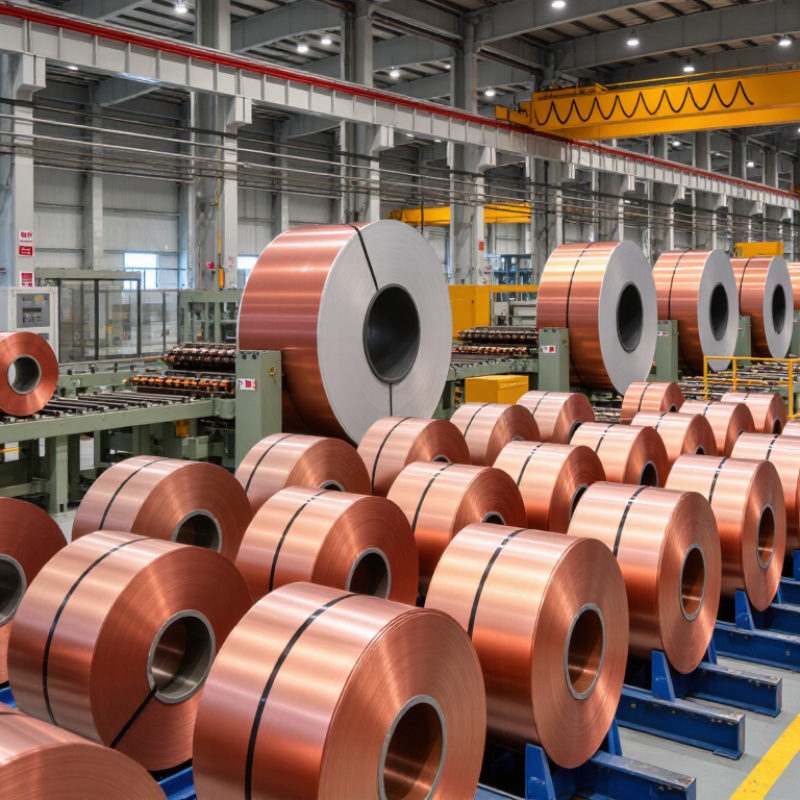
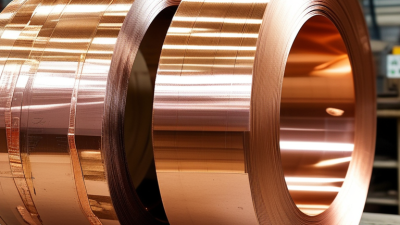
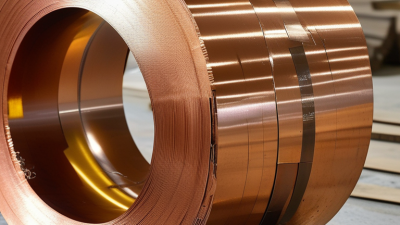
Copper strip is a flat, rolled copper product supplied in coils or cut lengths. Its thin profile supports reliable electrical, thermal, and forming performance. Thickness, width, temper, and edge condition all affect production results.
Common grades include C10100 oxygen-free copper, C11000 electrolytic tough-pitch copper, and C12200 phosphorus-deoxidized copper. C10100 offers excellent conductivity for demanding electrical assemblies. C11000 suits busbars, connectors, and general industrial conductors. C12200 provides better weldability for tubing and heat-transfer components. Brass and bronze strips add strength, wear resistance, or spring performance when pure copper is insufficient.
Industrial uses include transformer windings, battery tabs, switchgear, heat exchangers, and precision terminals. In a factory, operators may inspect surface scratches, burrs, coil camber, and thickness variation before stamping. A small edge defect can interrupt high-speed feeding. Electrical buyers should verify conductivity, tensile strength, elongation, and temper against the required standard, such as ASTM or EN specifications. Certificates should match the actual coil, not only the supplier’s catalogue. No grade wins every application. A stronger alloy may reduce conductivity, while a softer temper may complicate handling. Selection often requires testing, and my practical view is that initial assumptions deserve another check.
Copper strip is supplied in different grades to balance conductivity, strength, formability, and corrosion resistance. The chart compares widely used UNS copper grades by nominal electrical conductivity relative to annealed copper at 20°C, expressed in % IACS.
High-conductivity grades such as C10100, C10200, and C11000 are commonly selected for electrical connectors, busbars, transformers, and heat exchangers. C12200 is widely used for tubing and formed components because of its good weldability and formability, while C14500 is valued for improved machinability and resistance to electrical arcing.
Choosing among the top copper strip manufacturers requires more than comparing catalog prices. Global buyers should verify copper grade, temper, width, thickness, edge condition, and electrical conductivity. Request recent inspection reports and material certificates for each production lot. A serious manufacturer should explain its testing methods clearly.
Ask whether the factory controls rolling, slitting, cleaning, and recoiling internally. This affects dimensional stability and surface quality. Check tolerance data, not only standard product descriptions. For power components, even a small thickness variation can influence heat transfer and assembly fit. Sample strips should be tested by an independent laboratory when the application is critical. It costs more.
Traceability also matters. Each coil or bundle should connect to a batch number, production date, and inspection record. Review packaging details, especially moisture protection, coil orientation, and pallet strength. Damaged edges can appear after a long sea journey. Confirm production capacity, minimum order quantity, lead time, and communication practices before signing a purchase agreement.
Factory audits can reveal practical weaknesses. Look at calibration records, worker procedures, storage conditions, and rejected-material handling. A low quotation may hide unstable tolerances or expensive rework. I once treated a clean sample as proof of consistent production; that judgment was too quick. Ask for repeat samples from different lots. Also compare delivery performance, payment terms, export documents, and after-sales response. Standards such as ASTM, EN, or JIS may guide the purchase, but the supplier must match the exact project specification.
Top copper strip manufacturers serve different industrial priorities, so global buyers should compare strengths rather than rely on rankings alone. Some specialize in high-conductivity copper strip for busbars, switchgear, and electrical connectors. Others focus on precision alloys for springs, terminals, heat exchangers, or battery components. Their strongest capabilities often include controlled thickness, narrow width tolerances, clean surfaces, and stable coil processing.
Product strength begins with material expertise. Experienced mills can produce copper strip in grades such as electrolytic tough pitch, oxygen-free copper, and copper alloys with improved hardness. They may offer thicknesses from very thin foil-like gauges to heavier strip for structural electrical parts. Slitting quality also matters. Rough edges can cause cracking during stamping. Consistent annealing helps the strip bend without unexpected fractures. Details decide.
Reliable manufacturers usually support production with mechanical testing, conductivity reports, dimensional inspection, and traceable batch records. Buyers should ask how samples are tested, not only whether testing is available. A polished datasheet can still hide variation between coils. No supplier is perfect. Even capable manufacturers may have limitations in minimum order quantities, custom widths, lead times, or export packaging. I would check flatness after delivery, because transport tension and storage conditions can change the material’s behavior. Clear communication about standards, tolerances, surface finish, and application temperature separates a convenient supplier from a dependable manufacturing partner.
Global buyers should audit manufacturing capability, not just catalogue thickness. The USGS Mineral Commodity Summaries 2025 estimated 2024 global mine production at about 22 million metric tons. The International Copper Study Group reported refined copper usage near 26 million tonnes in 2023. This scale makes traceability essential. Ask for heat numbers, mill certificates, and controlled process records. A serious supplier links each coil to chemistry, rolling passes, annealing temperature, and final inspection. Paperwork matters.
Quality begins with an agreed standard. Specify ASTM B152/B152M or EN 1652, temper, thickness tolerance, conductivity, tensile strength, and elongation. Test chemistry through optical emission spectroscopy. Verify conductivity using resistance or eddy-current methods. Use calibrated tensile machines for yield strength, tensile strength, and elongation. Inspect burr height, camber, edge cracks, and oxide stains under controlled lighting. Sampling needs a written frequency, not a vague “routine check.” ISO/IEC 17025-accredited laboratories add credibility, but their scope must cover copper testing.
Manufacturing depth is visible in the coil. Ask whether lines support precision slitting, controlled annealing, tension leveling, protective packing, and trial lots. For thin strip, measure thickness across the width, not only at the center. Review capability indices, gauge repeatability, and nonconformance response. One concern remains: certificates may look complete while sampling is weak. Require retained samples and independent verification for first orders. That extra check costs time. It can prevent a failed stamping run, wasted tooling, and unstable electrical contact.
Top 10 Copper Strip Manufacturers for Global Buyers: Pricing, Export Services, and Supplier Selection Considerations
Copper strip pricing rarely follows a simple catalog number. The USGS Mineral Commodity Summaries 2024 reported about 22 million metric tons of mined copper in 2023. The World Bank’s April 2024 Commodity Markets Outlook placed its 2024 copper forecast near US$8,700 per metric ton. Buyers should therefore request a metal-price formula, conversion premium, thickness tolerance, temper, minimum order quantity, and freight basis. A low quotation may exclude slitting, testing, insurance, or import duties.
Export service quality matters equally. Reliable manufacturers should provide mill test certificates, dimensional inspection records, origin documents, and consistent moisture-resistant packaging. Ask whether the supplier supports FOB, CIF, or DDP terms. Confirm HS classification with your customs broker. Container loading photographs can expose weak packaging before shipment. Small details matter.
Selection requires evidence, not polished rankings. Check production capacity, equipment age, sample approval procedures, and traceability from coil to shipment. Request recent test data for conductivity, tensile strength, burr height, and surface condition. ISO certification helps, but it does not replace an independent audit. A top-ten list can mislead. I have seen attractive samples hide unstable batch performance. Compare at least three offers using identical specifications and delivery terms. Leave room for doubt.
| Rank | Supplier Profile | Primary Manufacturing Region | Typical Copper Grades | Typical Thickness × Width | Indicative Export Price | Minimum Order Pattern | Export Services | Common Standards & Documents | Best-Fit Buyer |
|---|---|---|---|---|---|---|---|---|---|
| 1 | Profile A — High-volume integrated mill | East Asia | C11000, C10200, C12200 | 0.10–3.00 mm × 10–1,250 mm | $9.00–$13.50/kg | 500–2,000 kg per size | Export packing, container loading, private labeling, mill certificates, FOB/CIF quotations | ASTM B152/B465, EN 1652, ISO 9001, RoHS/REACH declarations | Large distributors and electrical-component manufacturers |
| 2 | Profile B — Precision electronics strip producer | Japan and South Korea | C10200, C11000, C14500 | 0.025–1.00 mm × 2–600 mm | $11.50–$18.00/kg | 100–500 kg per specification | Tight-tolerance slitting, surface inspection, sample approval, air-freight support | ASTM B194/B152, JIS H3100, ISO 9001, material traceability records | Connector, relay, battery, and semiconductor-component buyers |
| 3 | Profile C — North American industrial strip mill | United States and Mexico | C11000, C12200, C14500 | 0.15–6.00 mm × 12–1,000 mm | $10.50–$16.50/kg | 250–1,000 kg per item | Domestic and cross-border logistics, ASTM documentation, scheduled releases, technical support | ASTM B152/B465, UNS designation, ISO 9001, Certificate of Analysis | OEMs requiring North American supply-chain continuity |
| 4 | Profile D — European compliance-focused mill | Germany, Italy, and Central Europe | CW004A, CW008A, CW112C | 0.05–4.00 mm × 5–1,000 mm | $12.00–$19.00/kg | 100–750 kg per size | EU delivery, lot traceability, recycling information, compliance declarations, technical audits | EN 1652, EN 13601, ISO 9001/14001, RoHS and REACH documentation | Automotive, renewable-energy, and regulated industrial buyers |
| 5 | Profile E — Southeast Asian export mill | Southeast Asia | C11000, C12200, C10200 | 0.20–3.00 mm × 20–1,000 mm | $9.25–$14.25/kg | 300–1,500 kg per item | FOB/CFR/CIF terms, export crating, consolidated containers, pre-shipment inspection | ASTM B152, EN 1652, ISO 9001, packing list, commercial invoice, certificate of origin | Cost-sensitive importers and regional stockists |
| 6 | Profile F — Copper alloy and high-strength specialist | Western Europe | C17200, C17510, C18150 | 0.10–5.00 mm × 5–500 mm | $18.00–$45.00/kg | 50–300 kg per alloy and size | Heat treatment, temper control, mechanical testing, engineering consultation, export packing | ASTM B194/B888, EN 12166, ISO 9001, tensile and conductivity test reports | Resistance-welding, aerospace, electrical-contact, and high-performance applications |
| 7 | Profile G — HVAC and heat-exchanger strip producer | China and Southeast Asia | C12200, C11000, C10200 | 0.20–2.50 mm × 20–800 mm | $9.00–$14.00/kg | 500–3,000 kg per specification | Level-wound coils, degreasing, edge conditioning, container export, inspection support | ASTM B152/B280, EN 12735, ISO 9001, dimensional and conductivity reports | Tube, fin, radiator, and heat-exchanger manufacturers |
| 8 | Profile H — Small-batch custom slitting service | India and South Asia | C10100, C10200, C11000, C12200 | 0.08–2.00 mm × 3–600 mm | $10.00–$16.00/kg | 25–250 kg per custom size | Prototype quantities, custom widths, sample coils, export documentation, courier dispatch | ASTM B152, EN 1652, ISO 9001, inspection certificate and certificate of origin | Prototype developers, repair companies, and low-volume importers |
| 9 | Profile I — Recycled-content copper strip supplier | Europe and North America | C11000 and recycled-content equivalents | 0.20–4.00 mm × 10–1,000 mm | $10.00–$16.50/kg | 250–1,000 kg per item | Recycled-content declarations, carbon-data support, regional warehousing, scheduled deliveries | ASTM B152, EN 1652, ISO 14001, recycled-content and environmental declarations | ESG-driven manufacturers and public-procurement projects |
| 10 | Profile J — Distributor-backed regional converter | Middle East and Eastern Europe | C11000, C12200, C10200 | 0.15–3.00 mm × 10–1,000 mm | $10.50–$17.00/kg | 50–500 kg from stock; larger project orders available | Local inventory, cut-to-length service, consolidation, door delivery, import assistance | ASTM B152, EN 1652, ISO 9001, invoice, packing list, certificate of origin | Buyers prioritizing short lead times and flexible quantities |