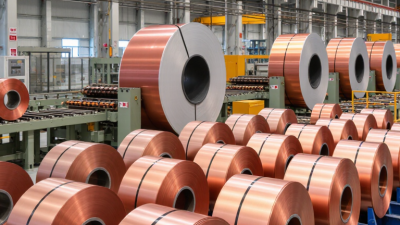
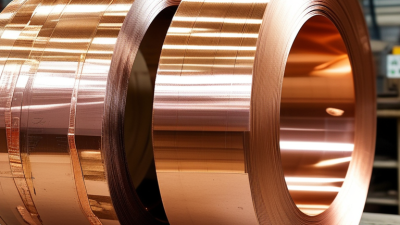
Choosing the right Copper Strip begins with the job it must perform, not a familiar grade name. Will it carry current, form around a tight bend, resist corrosion, or transfer heat? Each demand changes the choice. A strip that works well in a dry control cabinet may disappoint beside salt spray or repeated vibration. Small details matter.
Copper-alloy applications engineer Elena Brooks puts it this way: “Choose the strip for its working conditions, then verify the grade and temper against the design.” That is a practical rule, not a substitute for testing. Start by comparing conductivity, strength, thickness, width, and bend radius. Then check the operating temperature, surface finish, and any coating or joining requirements. A 0.2-millimeter strip may fit a compact connector, yet crack if its temper is too hard for the forming operation. Measure twice.
The trade-offs are real. High conductivity can matter more than maximum strength in a busbar; a spring contact may need the reverse. Ask suppliers for material certificates and dimensional tolerances, and test samples in the actual assembly where possible. Do not assume two strips with similar color or thickness behave alike. I would revisit the choice after the first forming trial; calculations can miss a sharp edge or an awkward tool path. A better selection balances performance, manufacturability, and cost—and records why that balance was chosen.
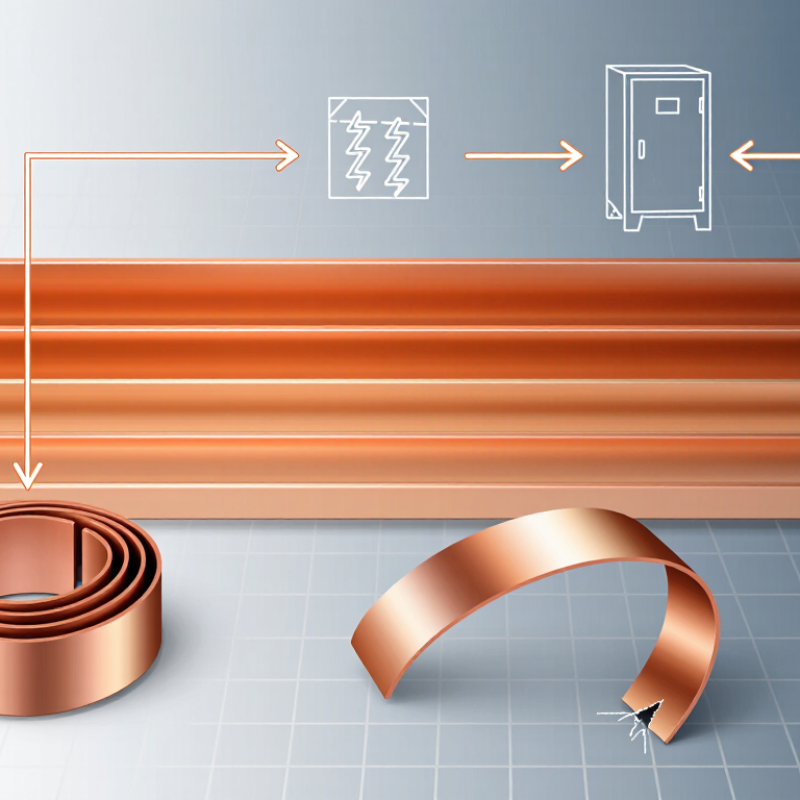
Copper strip is flat-rolled copper supplied in defined widths and thicknesses. It appears in electrical contacts, busbars, heat-transfer parts, and formed components. Its performance depends on more than copper content. Thickness, temper, surface condition, and alloy all influence how it conducts, bends, and holds its shape.
Electrical conductivity matters in current-carrying parts. For the same material and length, a thinner strip has greater electrical resistance. Temper affects forming too: soft strip bends readily, while harder strip can provide more strength but may need greater forming force. Surface oxidation can also affect electrical contact. A datasheet helps, but it cannot predict every tight bend or assembly detail. A small trial piece is often worthwhile.
Tips: Match the strip’s thickness and temper to the actual bend radius and load. Check conductivity and surface requirements against your design, not just a general product description. Measure sample parts after forming. It is easy to overlook springback, especially on narrow bends, and I would not assume a drawing tells the whole story.
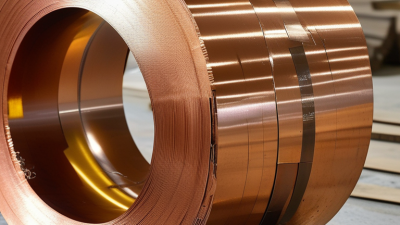
What Copper Strip Is and How Its Properties Affect Performance
Copper strip is flat-rolled copper or copper alloy supplied in coils or cut lengths. Electrical conductivity is shown here as a representative comparison: higher values suit applications where efficient electrical or thermal conduction is important, while alloying can increase strength or improve other properties at the cost of conductivity. Choose the alloy and temper to match your required conductivity, strength, formability, and operating conditions. Values are typical references; actual properties vary with specification, composition, and temper.
How to Choose the Right Copper Strip for Your Application
Copper strip selection starts with the job’s electrical and thermal limits. Estimate current, allowable voltage drop, and temperature rise, then check thickness and width against the installation space. The Copper Development Association’s C11000 data reports electrical conductivity of about 101% IACS at 20°C and thermal conductivity near 226 Btu/(ft·h·°F) at 68°F. These figures describe a high-conductivity copper grade, not every strip or finished assembly. Small details matter. A loose joint can create a hot spot even when the strip itself is suitably sized.
Mechanical requirements can change the choice. A tight bend may call for a softer temper, while a strip exposed to vibration may need greater strength and secure support. Check the supplier’s temper-specific tensile and bend data before setting a forming radius. There is a trade-off. Harder material can resist deformation, but may crack more readily during sharp forming. Prototype the actual bend if the design has little tolerance.
Match the strip to its surroundings, too. Salt spray, condensation, sulfur compounds, and contact with dissimilar metals can accelerate corrosion or joint degradation. Consider plating, insulation, spacing, and enclosure conditions, then test representative connections under expected heat and humidity. Copper’s conductivity figures are useful starting points, not a substitute for checking the finished assembly. That check is easy to overlook.
Choosing copper strip starts with the job, not the color of the metal. For busbars and electrical contacts, conductivity may outweigh formability. Copper Development Association data lists C11000 electrolytic tough-pitch copper at about 100% IACS conductivity; C26000 cartridge brass is about 28%. That gap can matter in a compact component that runs warm. C10100 oxygen-free copper can suit applications needing high conductivity and low oxygen content, though cost and availability also deserve a check.
Alloy is only half the choice. Temper changes how strip behaves during bending, stamping, and service. Annealed strip bends readily around a small radius; harder tempers resist deformation but may crack if formed too sharply. ASTM B152/B152M specifies copper sheet, strip, plate, and rolled bar, including requirements by alloy and temper. Compare its applicable requirements with the supplier’s certified test results. A datasheet is useful, but it cannot predict every forming line.
For a connector, I would compare conductivity, thickness tolerance, and bend radius before settling on a grade. For a formed spring, strength and fatigue behavior may matter more. The Copper Development Association’s alloy data provides useful reference properties, but production trials remain important. Small details count. A tighter bend than expected can change the result. I have seen teams choose by conductivity alone; that is convenient, and sometimes wrong.
Compare common copper strip materials by electrical performance, formability, strength, and typical use. Choose a grade and temper based on the finished part’s operating conditions, forming requirements, and applicable material specification.
| Grade / Alloy | Material Type | Electrical Conductivity (Typical, % IACS) |
Common Strip Tempers | Formability and Strength | Typical Applications | Selection Considerations |
|---|---|---|---|---|---|---|
| C10100 | Oxygen-free electronic copper | About 101 | Annealed (O), cold-worked tempers | Highly conductive and ductile; annealed strip is suitable for demanding forming operations. | High-performance electrical components, vacuum devices, and applications requiring low oxygen content. | Consider when conductivity and low oxygen content are priorities. It is generally selected for specialized requirements rather than routine general-purpose strip. |
| C10200 | Oxygen-free copper | About 100 | Annealed (O), cold-worked tempers | Excellent conductivity and good ductility; available in tempers suited to forming or greater stiffness. | Electrical conductors, electronic components, and applications where oxygen-free copper is specified. | Useful when oxygen-free material is required. Confirm the required conductivity and temper in the purchase specification. |
| C11000 | Electrolytic tough-pitch (ETP) copper | About 100 | Annealed (O), half-hard (H02), hard tempers | Excellent electrical and thermal conductivity; annealed strip bends readily, while cold-worked tempers offer greater strength. | Busbars, electrical contacts, connectors, heat exchangers, and general electrical strip components. | A widely used general-purpose choice for conductive parts. Check suitability for applications involving reducing atmospheres or special brazing conditions. |
| C14500 | Tellurium copper | About 90 | Annealed (O), half-hard (H02), hard tempers | Lower conductivity than pure copper, but improved machinability; formability depends on temper and strip thickness. | Machined electrical terminals, switch parts, and components requiring both conductivity and machining. | Consider where machinability is important. It is usually less suitable than pure copper for very tight bends or maximum conductivity. |
| C26000 | Cartridge brass (copper-zinc alloy) | About 28 | Annealed (O), quarter-hard (H01), half-hard (H02), hard (H04) | Excellent cold-forming capability in annealed condition; cold-worked tempers provide higher strength and springback. | Deep-drawn parts, formed terminals, decorative hardware, and general-purpose stamped components. | Choose for good cold formability and strength where pure-copper conductivity is not required. Verify corrosion and joining requirements for the service environment. |
| C51000 | Phosphor bronze (approximately 5% tin) | About 15 | Annealed (O), spring tempers such as H02 and H04 | Good fatigue resistance and spring properties; hard tempers provide useful elastic strength but require more forming force. | Electrical springs, contacts, relay components, and other parts requiring resilient performance. | Consider for spring and fatigue applications rather than high-current conductors. Select temper based on the required strength and forming sequence. |
| C17200 | Beryllium copper | About 20–30, depending on condition | Solution-treated and age-hardened conditions; strip condition depends on product specification | Can achieve high strength and excellent spring performance after heat treatment; forming and heat treatment must be planned together. | High-strength electrical contacts, precision springs, and components needing a combination of strength and conductivity. | Use only when its strength-performance combination is needed. Beryllium-containing material requires appropriate occupational-health controls during processing. |
Notes: Conductivity figures are approximate typical values expressed as a percentage of the International Annealed Copper Standard (IACS) at 20°C; actual values vary by grade, product condition, and specification. Temper designations and mechanical properties depend on the governing standard, thickness, and supplier certification. Confirm the required alloy, temper, dimensions, and performance limits on the material specification before ordering.
Choosing copper strip starts with the forces and space it must handle. Thickness affects stiffness, current capacity, heat transfer, and how easily the strip bends. Thin strip can suit flexible connections, while thicker stock may resist distortion in busbars or formed parts. Width also matters: a wider strip can increase contact area, but may not fit around terminals or through a narrow housing. Check the dimensions against the actual assembly, not just the drawing. A small clearance can disappear after bending.
Surface finish should match the contact and manufacturing process. A clean, bare copper surface may work for some applications, while a plated finish can improve solderability or help limit surface oxidation. Coating choice depends on temperature, exposure, and electrical contact requirements. Tin plating is common in some connections, but it is not automatically the right option. Confirm coating thickness and dimensional tolerances with the fabricator. Details that look minor on paper can affect fit.
Tips: Test a sample strip in the real assembly. Check bend radius, edge quality, and contact resistance where relevant. Record the finish and coating in the specification; otherwise, “copper strip” can leave too much room for interpretation.
Before comparing price, define the strip’s job. Confirm the required copper grade, temper, thickness tolerance, width, and edge condition. Match these details to the applicable product standard and your drawing. Standards vary by region and product form, so confirm the exact requirements with a qualified materials engineer. Small mismatch, big trouble.
Ask suppliers for a current material test report showing chemistry and relevant mechanical or electrical properties. Check that heat or lot numbers connect the report to the delivered coils. Review how the supplier checks thickness, flatness, and edge quality, and ask about instrument calibration. A certificate helps, but it is not the material itself. That distinction is easy to miss.
Test representative samples in your actual process. Measure conductivity after bending or forming, not only on a flat sample. Check for cracking at tight bends, burrs along slit edges, and dimensional changes during stamping. If the strip will face heat or moisture, reproduce those conditions where practical. Record results by lot, even when the first trial looks fine. A clean datasheet cannot replace a production trial, and sometimes the trial exposes a requirement your specification missed.